

Beyond winter’s gloom: Europe must stay on the path to net zero
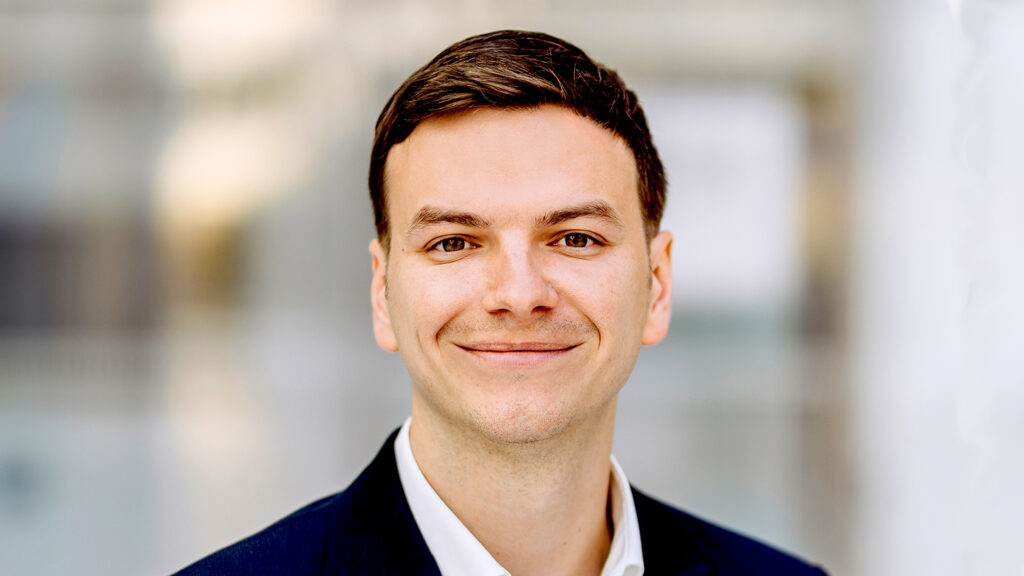
Amid uncertainty and division, how do we maintain momentum for climate protection and green innovation and investment? asks Marco Göllrich.
Gazing out the window on a winter morning in Berlin reveals stark, leafless trees and grey skies. Stripped of summer’s foliage, this season shows which branches remain strong – and which are brittle. It is a reminder of how political debates in Germany and beyond lay bare our true commitment to today’s critical challenges.
Just a few years ago, climate change and international collaboration ranked high on most agendas. Young people took to the streets to advocate for a greener, more just future, encouraged by emerging technologies – especially electrification – to cut emissions without compromising economic progress.
However, political discourse, like the seasons, shifts. In Germany and across Europe, the drive for industrial transformation has softened, dwarfed by debates on migration, national security, and identity. Meanwhile, fears that climate action could harm the economy or national sovereignty sometimes overshadow real progress.
Across the Western world, discussions about energy and growth sometimes revert to short-term thinking – typified by the “Drill, baby, drill” slogan. Yet reversing climate policies undercuts our shared goal of preserving the only planet we all depend on.
Meeting climate targets
Still, protecting the environment remains one of our most pressing obligations. In Germany, the supreme court has ruled that we must meet our climate targets for current and future generations. This imperative applies to all sectors, including energy-intensive processes such as hot-dip galvanizing – a technique in which steel is immersed in molten zinc to protect it from corrosion.
Companies in these fields are increasingly adopting cleaner, more efficient methods because it can prove profitable in the long run, and also because it aligns with the broader principle of environmental stewardship.
‘A convincing, forward-looking narrative for Europe must highlight the opportunities of a low-carbon economy – for investors and for workers and local communities.’
Marco Göllrich, Feuerverzinken
Now, the question is: can we regain the lost momentum for climate protection and green innovation and investment? If we linger on debates that question existing strategies – particularly on energy supply, job security, trade policy, and funding – we risk sending contradictory signals that disrupt companies and their future strategies. That uncertainty can stall investment and slow down green innovation when it is needed most.
A convincing, forward-looking narrative for Europe must highlight the opportunities of a low-carbon economy—not just for investors, but also for workers and local communities. Part of this effort involves reimagining Europe’s economic success story of recent decades. We must integrate material stewardship and circular design thinking into new business models, transforming industries to use resources more efficiently and to minimise waste.
Open to change
This will not be easy, as it demands compromise across political and economic spheres. Established business practices may have to be reshaped or phased out. More private capital needs to be mobilised within Europe. Companies, along with governments and citizens, must be open to change and oriented toward future lifestyles and markets.
Europe now stands at a crossroads. Managing migration, reducing energy costs, tackling bureaucratic obstacles, and handling geopolitical tensions require collective resolve. Amid uncertainty and division, our fundamental values become clearer. If we wish to protect our societies, democracies, and planet, we must maintain our environmental commitments, even when challenges loom.
Winter will pass, and spring will bring fresh growth, demonstrating that forward-thinking strategies are more than slogans. They are the bedrock of a stable, flourishing future – one that both investors and society at large can rally behind.
Marco Göllrich is head of communications and sustainability at Industrieverband Feuerverzinken e.V
