The simplest and quickest path to BREEAM certification
Dragos Avram, founder and CEO of Dutch proptech startup Sustainix AI, explains how he devised an actionable sustainability roadmap.
Finding the simplest path to net zero for each asset: that is what Sustainix AI promises to do. The Dutch protech startup uses AI to optimise the green building certification process at the lowest cost, while reducing regulatory risk and protecting asset value. Its AI-powered system analyses the data needed for BREEAM certifications, identifies gaps and provides a clear, investment-ready roadmap for upgrading real estate and achieving the certifications.
BREEAM, which stands for Building Research Establishment Environmental Assessment Method, is the leading building standard and has been used across Europe for more than 30 years. The market recognises that BREEAM-certified projects meet the highest sustainability and environmental standards.
Sustainix AI, founded in 2023, has received support from the Dutch Green Building Council, Schroders Capital as clients, among others. Here, Dragos Avram, founder and CEO, explains how the company operates and what difference it can make in the built environment.
How did the idea of Sustainix come about?
I ran an ESG management consultancy, helping with sustainability reporting. I started doing the BREEAM certification process for a client manually and realised that, if it could be automated, it would be much quicker and easier. Having done the manual work myself, I understand what my clients go through.
AI has become a bit of a buzzword today, but I saw exactly how and where it could be implemented and bring real value. It is not magic. We speed up the process, which is particularly important now because this year the revised EPBD (Energy Performance of Buildings Directive) comes into force and has to be transposed into national legislation by all member countries. It aims to at least double the annual renovation rate of buildings. Some 35 million buildings need to be upgraded by 2030, according to the Buildings Performance Institute, so we need to act much faster.
We offer a tool to understand where the asset is at and what needs to be done. Then the findings are used to implement changes and improve the building for its users. The EU has a track record of setting great goals in sustainability, but then making implementation difficult. The green transition is stalling not because owners don’t want to act, but because the information needed to make smart capital decisions is buried in unstructured documents, outdated spreadsheets, and assessor jargon.
BREEAM assessments are slow, manual, and expensive. Advisers spend weeks extracting evidence from pdfs, floorplans, photographs and certificates, and the result is delayed certifications, unclear ROI, and capital sitting on the sidelines. We serve BREEAM consultancies and assessors, the firms running multiple certifications each year, who are drowning in admin and evidence chasing.
We give them back time and let them scale without hiring. Through them, we serve the building owners and real estate investors who need a clear, fast picture of where their assets stand and what a green upgrade is worth financially.
How does Sustainix work?
It starts with data input, a technical diligence report. The company submits the documentation and building data, which need to be available and accurate. We tell the company what they need to get and do to achieve the relevant credits. For example, without an energy label, you cannot score points. The client does a site visit, has a good look at the asset, takes pictures and records a lot of information to integrate and complement the data. We clean up and organise the pictures for them.
The second step is analysing the data: it gets uploaded and read by AI, so we get a BREEAM score, a capex forecast and implementation risk. To chart an improvement path data needs to be analysed and scored, so we add certain metrics that help investors understand better, like capex or risk. We aim to bring clarity to investors and present them with an actionable sustainability roadmap.

‘BREEAM is well-established in Europe. It’s the most widely used green building standard in Europe, accounting for 80% of certifications.’
Dragos Avram
The third step is the pre-assessment. We orchestrate all AI technologies in one place and evaluate and assess the answers. Our AI platform takes unstructured building documents and produces structured evidence, credit mappings, gap analyses and capex insight reports.
We translate the technical language of BREEAM into clear investment decisions, showing asset owners what interventions are needed, what they cost, and what return they generate. Capital moves when the ROI is there: we make it visible.
We connect sustainability impact with financial impact, connecting the dots between operational language and the sustainability agenda. We provide a framework that unifies everything, building the first AI-native platform that connects green building certification to real capital decision-making at scale.
We promise to help companies become an “AI-native organisation”, but we are not ChatGPT. We’re purpose-built for BREEAM. Hallucination risk is managed through human review and quality controls at every step of the workflow. There is always a human in the loop.
Is it easy to persuade investors, or is there some pushback against certifications?
BREEAM is well-established in Europe. It’s the most widely used green building standard in Europe, accounting for 80% of certifications, and it is the framework that real estate investors, funds and lenders increasingly require. It can be used as a methodology to know where you stand and where you can get to. We use it as the lens through which we turn building data into actionable sustainability intelligence.
Some people in the market see certifications as paper-pushing, but we can prove that they drive performance. Climate resilience and energy efficiency lead to a reduction in operational costs. I see on LinkedIn, for example, that once a certification has been achieved, it gets a lot of traction. The commercial benefits are clear, especially if you want to sell an asset.
It is also an important means of differentiating yourself from your competitors. The backdrop is the Draghi report [the 2024 report on European economic competitiveness and the future of the European Union, authored by former ECB president and former Italian prime minister Mario Draghi] and the call for Europe to be stronger, more autonomous and independent.
In the market, we see there is a real split: a lot of smaller players have cut their budgets or let some people go, so sustainability has become less of a priority, but European and UK pension funds are determined to be sustainable.
Where are your current projects and what asset classes are you looking at?
Our tool is sector-agnostic, but BREEAM tends to be used in offices, logistics and hotels, so for the time being, we are focusing on commercial real estate. We have three active pilots, a retail centre in the Netherlands, a hotel in Germany, and an office building in Luxembourg, plus more than 30 companies on a waiting list for our second launch cohort. Our work is based on the investment funds we work with and the projects offered to us.
Data centres are interesting, as they will be a priority over the next five years. It should start with a better analysis of where you build them, which should be away from built areas, as they use a lot of water as well as energy. In the Netherlands, we have a grid congestion issue. We should also think about the way we build data centres to make them more efficient. I know some companies want to build them from wood, for example.
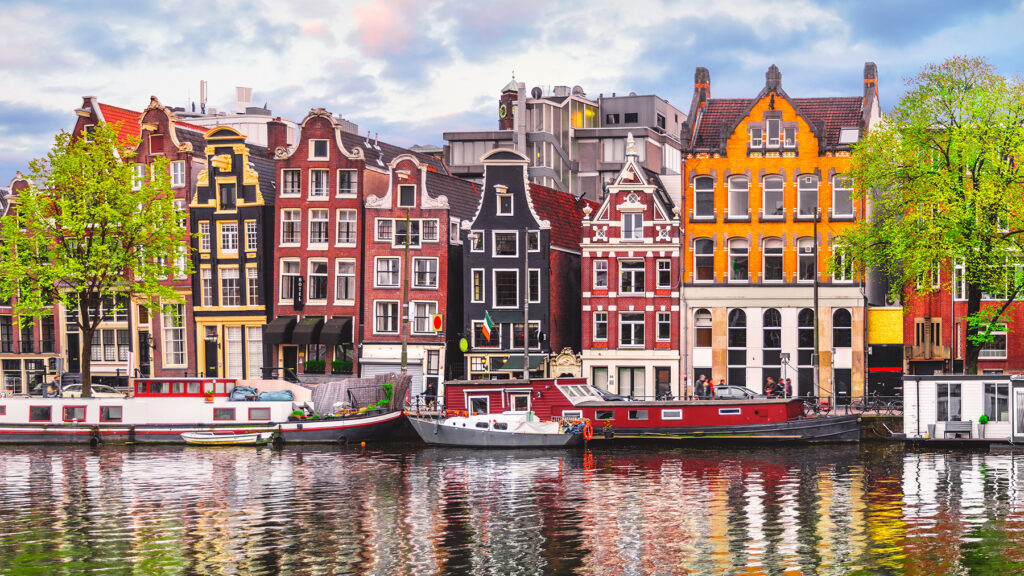
My favourite assets are period buildings in cities like London or Amsterdam. Regulations are a challenge, and old buildings are inefficient but have intrinsic value. The drive to upgrade and preserve historic buildings for generations to come is what gets me out of bed in the morning.
What is on your to-do list for the future?
We want to keep improving accuracy and make sure our clients spend even less time on the assessment. We want to deal with all the challenges, as the process is different for different asset classes. Our goal is to do 50 assessments this year.
We are also planning to expand our geographical reach – we have started with the Netherlands, Germany and the UK, the places closest to us, that we understand, where we can drive change in the portfolios we are dealing with. We are also discussing a project in Italy, and in future we want to expand into really interesting markets like Spain and the Nordics. The Middle East is also a huge potential market.