

We see sustainability as part of how the business operates day-to-day
How do you assess the real estate sector’s progress on sustainability as we enter 2026?
From our perspective at Segro, progress across the sector has been tangible and 2025 was a year of real delivery rather than new promises. We see sustainability as part of how the business operates day-to-day, not a parallel agenda, and that approach is increasingly reflected across the industry.
There continues to be steady improvement in the quality of new space, greater attention to embodied and operational carbon, as well as more collaboration around practical solutions. Our own progress will be set out shortly in our annual report and Responsible SEGRO report, but the direction is clear. We remain focused on reducing carbon emissions across our operations and developments and on supporting customers to do the same through high-quality, efficient buildings and long-term partnerships.
The wider sector still faces challenges, but there is momentum and a great will to collaborate. Sustainability is now embedded in conversations about asset quality, resilience and long-term value in a way that would have been far less common even a few years ago.
What would you say is the biggest issue facing the sector when it comes to sustainability?
The biggest test for sustainability is how organisations behave when conditions are difficult. When capital is tighter or priorities compete, it becomes clear whether sustainability is genuinely embedded or treated as optional. Long-term thinking matters here. Businesses that plan to own and operate assets for decades tend to make different decisions, because resilience, asset quality and relationships with communities and customers are central to their success.
Alongside that cultural challenge sit some very practical constraints. Access to renewable power, the availability of low-carbon construction materials, incentives to move away from gas and other fossil fuels and clear, stable regulation all shape what can be delivered on the ground. These are not abstract issues for real estate, they directly affect how buildings are designed, built and used.
For our sector in particular, the transition to electrification is critical. Logistics and industrial buildings have a key role to play in enabling that shift, from supporting electric vehicle charging to ensuring sites can accommodate higher power demand. At Segro, all the electricity we procure is zero carbon and we continue to invest in on-site renewable generation, including a significant expansion of rooftop solar. Supporting customers through this transition is an essential part of creating space that works for the future.
What are your specific plans and key priorities for 2026 and what are the main obstacles you see on that path?
Our priority remains delivery against our net-zero targets, which are validated by the Science Based Targets initiative. That includes continuing to reduce emissions from construction, where securing lower-carbon materials remains challenging, and working closely with our partners to make progress where supply chains allow.
Customer collaboration will be increasingly important. Access to good-qualityc energy data helps us understand emissions across the portfolio and identify where occupier energy and power demands change, allowing us to support customers with their operational challenges. That relies on trust and partnership, and it is an area we will keep pushing forward.
2026 is also about looking ahead. We are spending more time on emerging issues such as biodiversity and on deepening our assessment of climate-related risks, not just at an asset level but in terms of how a changing climate could affect businesses like ours and our customers over the long term. Regulation will continue to evolve, and keeping pace with new requirements will demand time and resources.
The main constraints are familiar ones. Capacity, data and the speed at which external systems change can all slow progress. Even so, the direction of travel is clear. Staying focused, investing for the long term and working in partnership remain the most effective way to move forward.
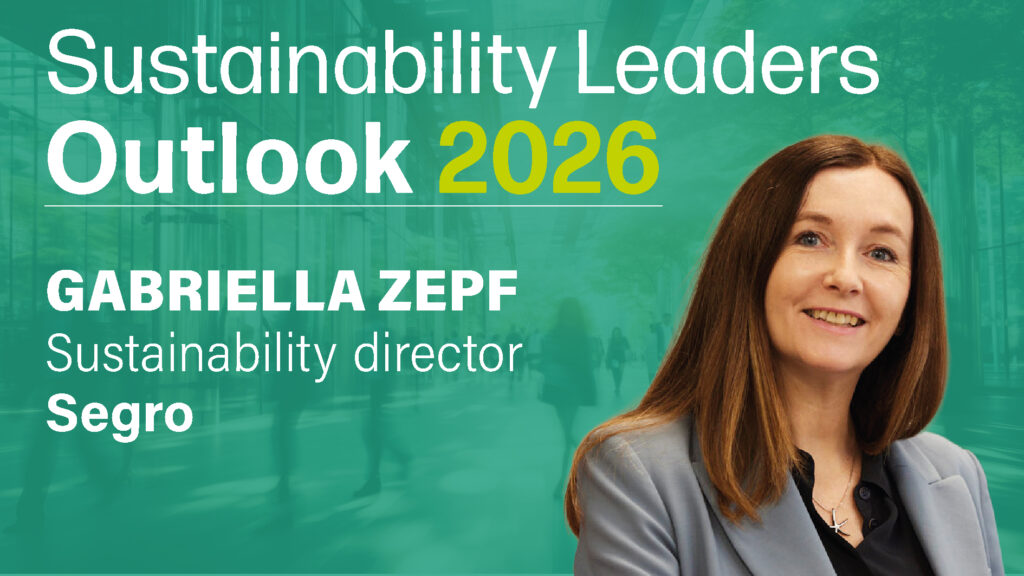
Gabriella Zepf, Segro
