

Seville to host the EU’s first net-positive emissions building
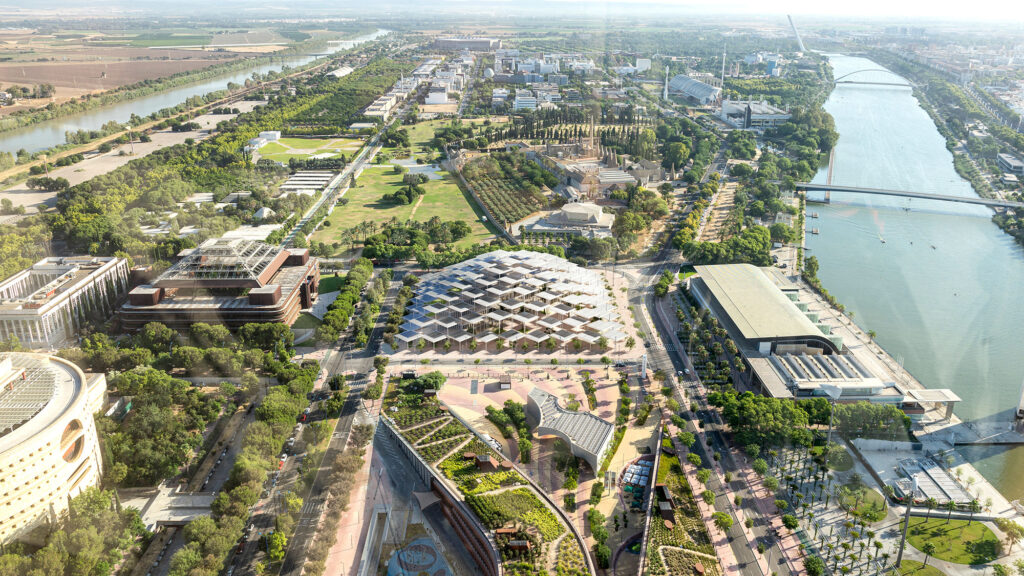
Building work has started on the Joint Research Centre that will set new standards in sustainable architecture. By Nicol Dynes.
Construction work has just started on the European Commission’s first large-scale net-zero emissions building – the new headquarters of the Joint Research Centre (JRC) in Seville, southern Spain.
Unlike carbon-neutral buildings that balance their emissions, this new building goes a step further by removing more carbon dioxide from the atmosphere than it emits. This will primarily be achieved through renewable energy, utilising a solar panel system that generates more power than the building requires for its operations.
The Seville JRC project represents a prototype for the future of EU institutional infrastructure, which prioritises climate action, celebrates cultural heritage and puts people at the centre of development.
Cultural heritage
Architecturally, the project draws on Seville’s cultural heritage. Its dome-shaped structure and central square are reminiscent of traditional Andalusian layouts, but reimagined with modern efficiency and climate-conscious materials.
The roof will comprise solar panels that will generate energy as well as providing shade to cool the space below. This setup ensures the building achieves net-zero emissions, including offsetting the carbon footprint of its construction. The new building’s open-air spaces will also be accessible to the public, reinforcing its role as a community landmark.
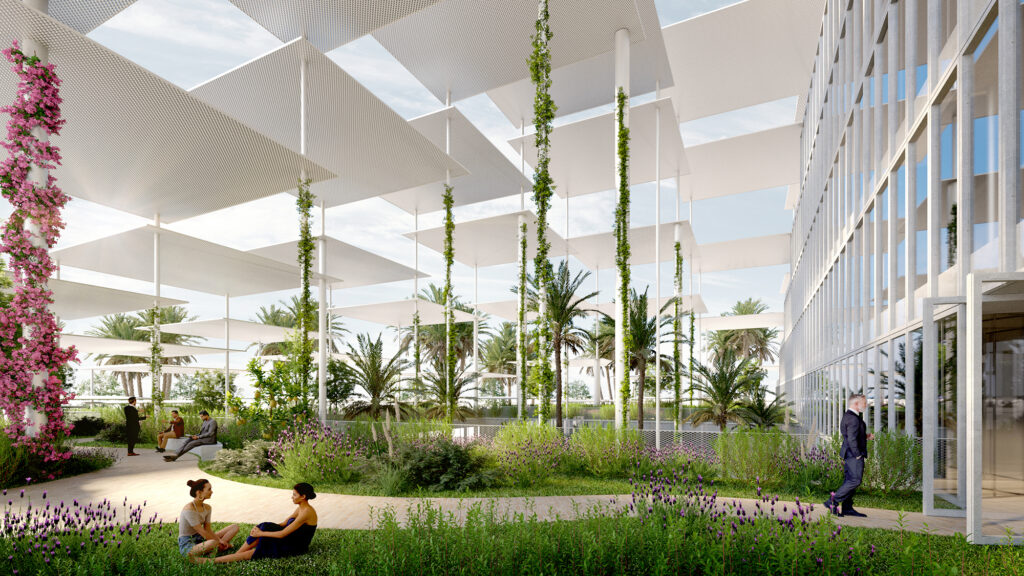
Inside and out, the building is designed to be flexible. It will feature open, modular spaces that can adapt to evolving research needs. The materials selected, such as local limestone, wood, and ceramics, will reduce the building’s carbon footprint while supporting the local economy and preserving the region’s architectural heritage.
The overall goal is not just to reduce environmental impact, but to become a symbol of innovation, aligning with the principles of the New European Bauhaus (NEB).
Enhancing quality of life
The policy and funding initiative launched by the EU Commission in 2021 aims to merge design, sustainability, and social inclusion across European spaces. By focusing on design that respects local traditions while embracing innovation, the NEB initiative aims to enhance people’s quality of life and strengthen Europe’s resilience, creating buildings that are socially inclusive and economically viable. The goal is for architecture to contribute to the environment in a positive way, rather than just minimising its impact on the environment.
Almost 500 projects promoting NEB values have been launched to date, spanning 3D-printed building solutions, bio-based construction materials and rooftop gardens in European city centres.
The construction contract was awarded to Constructora San José and Sociedad Española de Montajes Industriales, and building work is set to take two years.
Once complete, the building will house around 400 researchers and staff who currently work at the existing JRC building in Seville. Since its opening in 1994, the JRC has served as a key hub for scientific and technical expertise, supporting EU policies in fields like innovation, sustainability, artificial intelligence, economic modelling, fiscal analysis, and digital transformation.
Located in Isla de la Cartuja, the project stems from collaboration between the European Commission, Seville City Council, Andalusia’s regional government, and the Spanish government.
