

Amid shifting attitudes to ESG, we need to be clearer about the business case
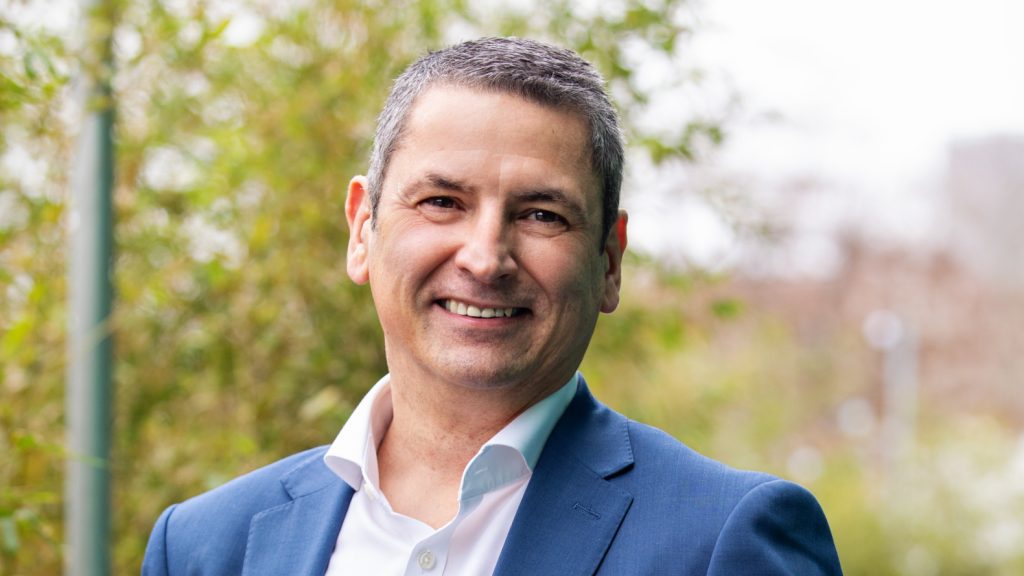
ULI Europe continues to push the decarbonisation agenda – and the case for action has never been clearer, says Simon Durkin.
The real estate sector is operating in a period of significant change. Structural shifts, macroeconomic uncertainty, geopolitical volatility, demographic change, digitalisation, AI and the climate crisis are all reshaping the context in which our industry makes decisions.
Recent world events have clearly affected investment activity and sentiment. In a more volatile environment, it is understandable that organisations focus heavily on near-term priorities: liquidity, refinancing, cost control, occupier demand and capital allocation.
But the risk is that longer-term issues such as sustainability and decarbonisation slip down the agenda at exactly the point when they need to be embedded more deeply into decision-making. We have seen this happen in previous cycles, but the crisis is becoming ever more urgent.
We also need to be honest about the fact that attitudes towards ESG have shifted in some quarters. There is more pushback, particularly where ESG is seen as regulation, bureaucracy or a cost rather than as part of value creation, risk management and long-term asset performance.
Adjusting ESG strategies
The recent Emerging Trends in Real Estate Europe 2026 report, produced by ULI and PwC, reflected this changing mood. It showed an industry adjusting ESG strategies in response to macroeconomic uncertainty, and asset managers increasingly being asked to demonstrate the link between sustainability, value and investment performance.
The survey showed that the proportion of industry leaders who see ESG as a driver of strategy and decision-making over the next five years had fallen from 40% to 21% year-on-year.
That is a meaningful shift, and we should not ignore it. But the same research also revealed that the industry’s long-term commitment to decarbonisation remains critically important for most companies, despite the political and financial backdrop.
So the message is not that sustainability has gone away – it is that the business case needs to be clearer, sharper and more closely connected to value, risk, liquidity and performance.
Nevertheless, the industry has made progress. Momentum has been building, and we have been moving in the right direction. But we cannot become complacent: the need for action remains urgent, and the pace of change still needs to accelerate.
Significantly behind schedule
At our last ULI Europe Conference, a majority of members polled felt that the sector was moving too slowly on decarbonisation, with some believing that we are significantly behind schedule. That is a sobering message, particularly when we remember that the Paris Agreement was reached 10 years ago.
The challenge is still significant. That is why the decarbonisation of real estate and housing affordability are both mission priorities for ULI. We believe ULI has an increasingly important role to play in helping the industry move from ambition to practical action.
Our focus is on collaboration, insight and action. We want to help identify the barriers holding back progress, support the development of practical solutions, and convene the parts of the industry that need to work together more effectively.
Our recent Global Sustainability Outlook noted an important shift: sustainability in the built environment is increasingly being reframed from a moral imperative to a business necessity, and from compliance to competitive advantage.
That matters. There is now broader recognition of the financial risks associated with failing to adapt real estate for a low-carbon economy. There is also growing demand for a more consistent and standardised approach to sustainability, transition risk and performance measurement.
ULI’s work in Europe has contributed to that momentum, and the industry has come a long way.
Our C Change programme was formed in late 2021 in response to member demand for practical support on decarbonising the built environment. Its purpose has always been clear: bring the industry together, focus on practical solutions, and help companies move faster.
Transition Risk Assessment Guidelines
One of the first initiatives from the programme was the Transition Risk Assessment Guidelines, which help the industry assess and disclose transition risks as part of property valuations. A major next step is Preserve, a practical open-source tool we are about to launch.
Preserve is designed to help investment professionals quantify the financial impact of the net-zero transition and adopt a more consistent approach to incorporating transition risk into investment models.
It can support the adoption of our guidelines at scale. But, as with any practical tool, its success will depend on the industry using it.
Housing affordability is another area where the challenge is urgent, and the link to sustainability is increasingly clear. Europe’s housing system is at a tipping point. Affordability and decarbonisation are often treated as separate issues, but in reality, they are deeply connected. Across the continent, millions of households are facing increasing rents and rising energy costs.
At the same time, much of Europe’s building stock is old and inefficient, with more than 75% considered energy inefficient.
‘We want to help identify the barriers holding back progress, support the development of practical solutions, and convene the parts of the industry that need to work together more effectively.’
Simon Durkin
The need for affordable, low-carbon housing has never been clearer. Yet progress remains too slow. The barriers are systemic: fragmented planning frameworks, misaligned investment incentives, skills shortages, data gaps and delivery models that do not always support the outcomes we need.
To make progress, we need to understand the system and then work out where it can be changed.
That is the focus of C Change for Housing. The programme is identifying the systemic barriers holding back progress, mapping areas of momentum that could be scaled, and pinpointing where targeted collective action can have the greatest impact.
Its first output was a free, open-source interactive systems map highlighting 12 key intervention areas for industry-wide collaboration, supported by a selection of European case studies already delivering practical solutions.
The next phase moves from insight to action. We are working with industry partners to co-develop, test and scale solutions that can help make affordable, low-carbon housing the norm rather than the exception.
A key part of this work is redefining the business case. We need to demonstrate the long-term value of affordability and decarbonisation, establish clearer definitions, improve measurement, and build a shared language that allows the industry to act with greater confidence.
Alignment on decarbonisation
Through C Change, we are also focused on better alignment between stakeholders, owners, occupiers, investors, property managers and others. Decarbonisation cannot be delivered in silos: it requires structured collaboration and a shared understanding of the long-term business case.
To support this, we have developed best practice guidance on green committees and sustainability forums in multi-let commercial buildings. These forums can help improve collaboration, agree priorities, manage delivery and turn shared sustainability ambition into measurable results. These are just some of the areas we are focused on.
Across all our sustainability work, the goal is to convert ambition into measurable action. That means demonstrating the business case, protecting value, and helping the industry manage transition risks such as carbon pricing, regulatory change, changing occupier expectations, and the potential impact of inaction on asset viability, liquidity and pricing.
Since joining as CEO of ULI Europe, I have been struck by the depth and quality of the work already built across our programmes. There is a strong legacy here. My priority is to build on that foundation while sharpening our focus on the issues that matter most to our members and to the industry.
That means using ULI’s strengths, insight, learning and convening power to support better long-term decision-making and value creation.
Sustainability, housing affordability and decarbonisation will remain central to that agenda. They are not side issues, they go directly to the future resilience, relevance and performance of our industry.
We will continue to facilitate dialogue and collaboration through our events, including the ULI Europe Conference and the C Change Summit, as well as through our dedicated C Change and C Change for Housing programmes.
Most importantly, we will continue to work with our members and partners to co-create the practical guidance, tools and solutions the industry needs.
The task now is to move faster, with greater clarity and greater commercial discipline. The work is urgent – and it matters more than ever.
Simon Durkin is chief executive officer of ULI Europe
