

We are entering the phase of real execution and measurable impact
How do you assess the real estate sector’s progress on sustainability as we enter 2026?
Sustainability has become embedded in the real estate industry – it’s no longer an add-on, but an integral part of the value chain. ESG has evolved from a media-driven trend into a core element of investment, risk and portfolio management.
The sector has made structural progress: ESG is now firmly embedded in investment and risk management; regulation and reporting obligations have brought greater professionalism; and sustainability is increasingly seen as a core component of value creation. This is particularly visible in sectors such as senior living and logistics, where digital monitoring systems and targeted renovations are delivering tangible efficiency gains.
However, progress remains uneven. While new construction increasingly meets ambitious carbon-neutral standards, the existing building stock remains the critical leverage point – it is where most emissions originate, but also where the greatest potential for value creation and CO2 reduction lies.
Yet renovation depth often remains inadequate, as subsidy frameworks, energy prices, and ownership structures still slow investment decisions. Transparency, harmonised standards, and realistic decarbonisation pathways are still lacking in many areas. The crucial next step is now to achieve measurable impact based on this foundation – with clearly-defined KPIs and verifiable progress.
What would you say is the biggest issue facing the sector when it comes to sustainability – is it decarbonisation, regulation, certifications, technological innovation, including AI, or something else?
The key lever remains the decarbonisation of existing buildings. However, the real bottleneck lies in integration – the interconnection of regulation, data quality and technological tools. Only when these elements work together can we achieve measurable progress.
Artificial intelligence and digital solutions can play an important enabling role by analysing energy consumption data, optimising building operations, and prioritising ESG measures. Yet technology must not become an end in itself – it needs to be embedded in solid governance and data structures. ESG has to evolve from a mere reporting task into an active management tool that improves both capital and CO2 efficiency.
At the same time, we observe that ESG receives less public attention in economically challenging times, while trend topics such as AI or ‘defence assets’ gain prominence. It is essential not to view these developments as competing but instead to understand technology as an enabler of sustainability – combining financial and ecological efficiency.
What are your specific plans and key priorities for 2026, and what are the main obstacles you see on that path?
Our focus in 2026 is squarely on measurable impact. We are extending our decarbonisation roadmaps across the entire portfolio and actively managing energy consumption and emissions KPIs through real-time digital dashboards.
In parallel, we are further developing our ESG scorecard – with harmonised KPIs, weightings and targets to make progress comparable across verticals and funds. Another strategic focus is on data validation and the integration of smart metering systems to ensure reliable tracking of CO2, energy, and water usage data.
‘Only on the basis of robust, validated data will ESG become a true and lasting value driver – systematic, verifiable and impact-oriented.’
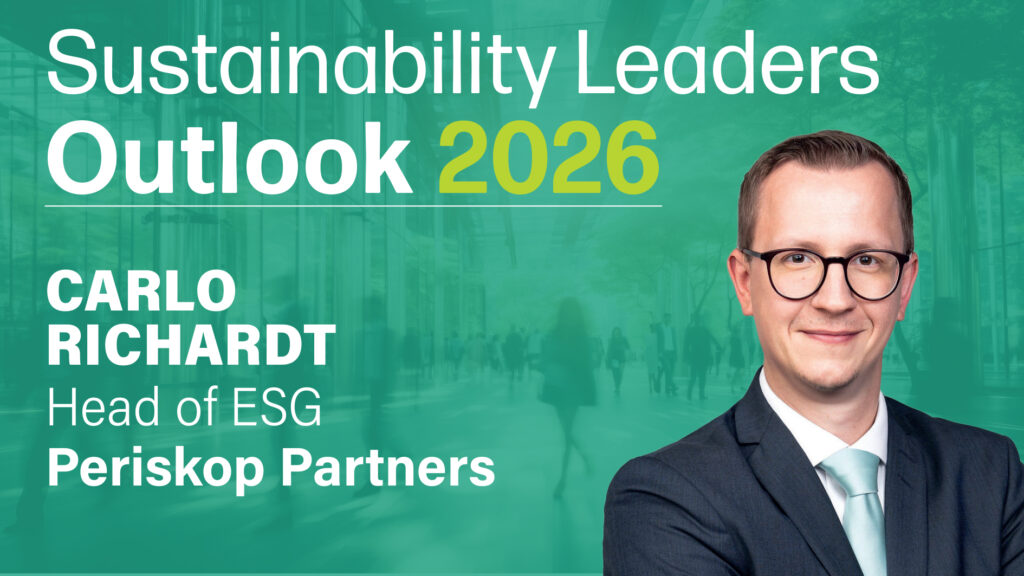
Carlo Richardt, Periskop Partners
The greatest challenge remains data consistency across Europe. Divergent regulatory frameworks, energy pricing systems and reporting standards make harmonisation difficult. We respond with collaborative solutions and internal competence building. Only on the basis of robust, validated data will ESG become a true and lasting value driver – systematic, verifiable, and impact-oriented.
ESG is at an inflection point: after years of building reporting systems and compliance structures, we are entering the phase of real execution and measurable impact.
The industry is moving away from questions of compliance towards those of efficiency and impact measurement. Digitisation and artificial intelligence will be decisive accelerators – enabling automated data capture, modelling of emission trends, and data-driven investment decisions.
Cooperation between real estate companies, energy service providers and technology partners is also increasing. This creates the foundation for implementing decarbonisation strategies, not just at asset level, but across entire portfolios. Investors, too, are demanding demonstrable impact rather than pure ESG conformity – a shift that strongly influences product design and capital allocation.
Despite economic headwinds, the momentum remains strong. ESG is increasingly recognised as an economic management tool that reconciles efficiency with accountability. The public discourse may have quietened, but the impact behind the scenes continues to grow. That, to me, is the real progress.
Carlo Richardt, Periskop Partners
