

Outlook 2026: Denmark resi attracts strong investor interest
Investment into all segments of the residential sector is accelerating, experts agreed at Real Asset Media’s European Outlook 2026: the Nordics, which took place in Copenhagen on Wednesday, hosted by Poul Schmith, Denmark’s largest law firm.
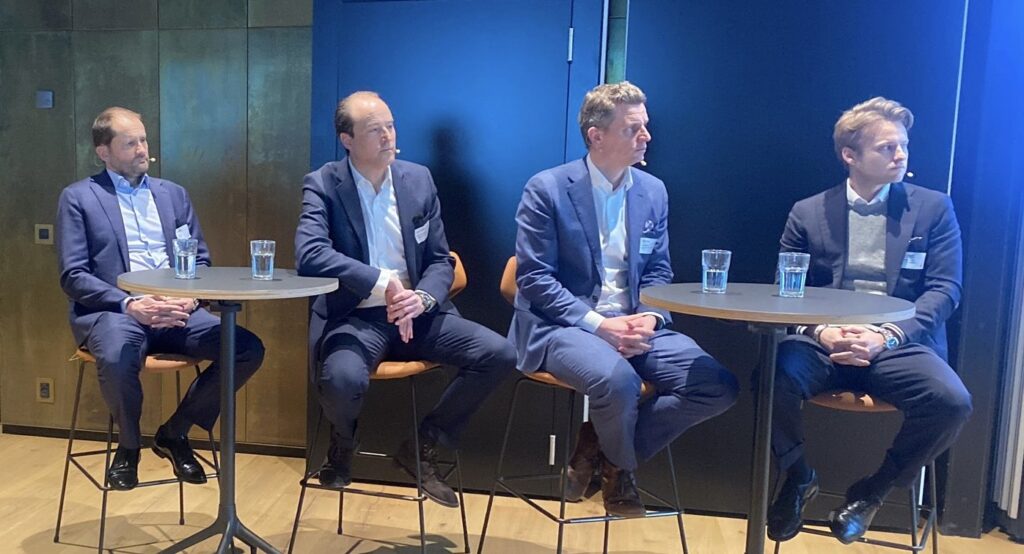
“We are seeing a real sentiment shift towards investing in new asset classes and away from traditional sectors”, said Dominik Brambring, Partner, Periskop Opportunities. “The supply/demand imbalance in residential continues to grow, as not enough new supply is coming to the market.”
In Denmark the living sector is dominant, and investors’ interest is focused on the capital city, which is seeing a steady influx of new residents, mainly young professionals.
“The residential market is very strong and we have seen more new international players come to Denmark”, said Tobias Vieth, Partner, Attorney, Poul Schmith. “Danish pension funds have also been very active in the market with a ‘buy buy buy’ strategy on the expectation that rents will increase, especially in Copenhagen.”
Some 40% of all jobs created in the last ten years in Denmark have been in the capital, which explains why the majority of transactions take place there. Such a dynamic and liquid market is a positive for investors.
“The main theme in Denmark is fierce competition”, said Christopher Aandahl, Co-founder, Three Lakes Capital. “There are few assets in the market and a lot of interest from domestic and foreign investors. We are seeing a huge inflow of capital into what is a small market.”
Many family offices pursuing a strategy of wealth preservation have also been active in the residential market because Denmark is seen as a safe haven, with a transparent market and low transaction costs.
“We are seeing funds from more volatile countries, such as South Africa where the currency fluctuates, coming to Denmark looking for stability and liking the safety of the residential market”, said Vieth.
The only drawback, apart from competition, is that transactions take a long time now, he said, up to six months because there are more compliance checks and a stricter due diligence process.
“We are even seeing core capital moving out of Germany and into Denmark, willing to move up the risk curve and provide forward-funding for much-needed development”, said Aandahl. “Investors are also beginning to look at other cities and not just Copenhagen.”
On the positive side, there is huge availability of financing for development, not just from banks but also from alternative debt providers that are stepping in offering good terms and more flexible structures.
On the negative side, there are serious bottlenecks in the planning process in various municipalities and there is a strong reluctance to allow high rises. “Usually the new builds that are allowed are 5-6 storeys max, so clearly the land could be used more intensively”, Vieth said. “Construction costs are high and it can be difficult to make the numbers work.”
In Copenhagen there is particularly strong demand for micro-living or smaller units for the 7,000 or so young professionals who move to the capital for work every year, but at least 20,000 units are needed.
“There’s a demand/supply imbalance that is driving up values and rents and we expect this to continue, because the municipality is focused on providing larger family units”, said Aandahl. “So there is a huge mismatch between what the demand is and what is being built.”
The problem is exacerbated by the fact that many large apartment blocks are owned by institutional capital that holds assets for the long term.
“We are very bullish on the market and micro-living is a strategy we definitely want to pursue”, said Kasper Wehner, Investment Director, Northern Horizon. “We believe values are set to increase further, but also rental growth is higher, partly due to the higher churn, which is this segment is actually an upside because when people move out rents increase even more.”


