

‘Automotive will continue to be a major part of the German economy’
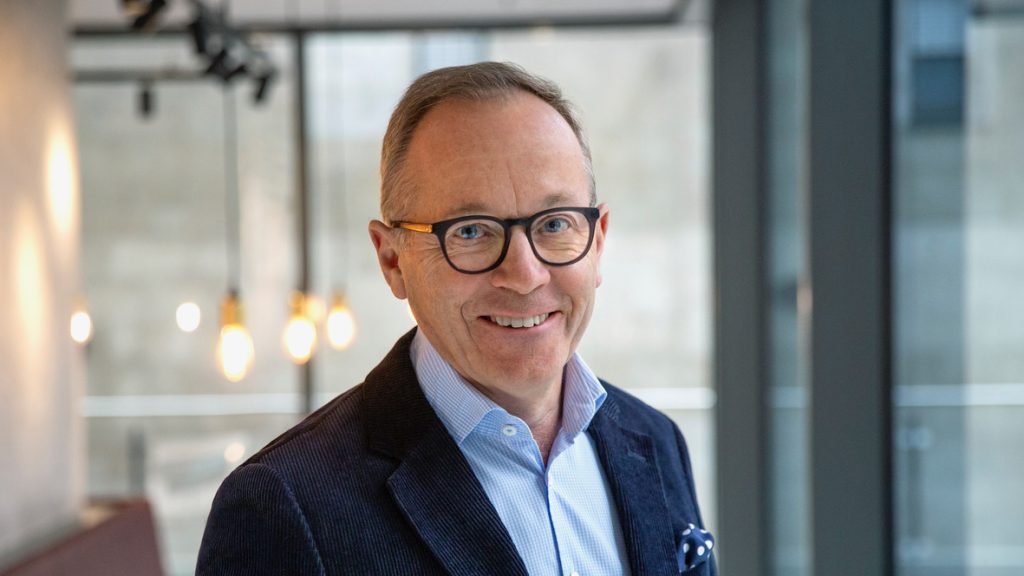
Jason Mitchell speaks with StoneVest partner Dr Wulf Meinel about the evolving opportunities in light industrial markets across Germany, Austria and Switzerland.
Dr Wulf Meinel believes the Continental European industrial real estate market has the potential to grow substantially. Here, the partner at pan-European light industrial real estate investment firm StoneVest explains why.
He touches on Germany’s continued dominance, shifting occupier demand across key sectors, and how structural changes in European industry – from nearshoring to defence – are reshaping investment strategies, asset selection, and long-term capital deployment.
Where are you currently seeing the strongest opportunities across DACH – is Germany still the core focus, or are Austria and Switzerland becoming more attractive on a relative basis?
Definitely in Germany. Switzerland is slowly becoming attractive also for non-Swiss investors. Austria is often overpriced, while in Germany, the bid-ask spread has started to narrow.
Which segments within light industrial are showing the most resilient occupier demand – production, R&D, urban logistics, or hybrid – and where are you deploying capital today?
Resilient occupier demand is indeed a key metric for us. The automotive sector continues to be Germany’s major industry, despite structural challenges and headwinds. The automotive sector is being shaken up, but it will continue to be a major part of the German economy. To ignore this sector completely would be a mistake.
Pharmaceuticals and non-automotive engineering are strong segments too. The defence industry has strong tailwinds and consumer goods production and distribution are stable sub-sectors.
Is nearshoring translating into measurable demand for production space in Germany, or does it remain more strategic narrative than operational reality?
Nearshoring is a driving element in the European industrial space. The trend, initiated during the covid pandemic, is strong and will further increase demand for industrial space.
How is the restructuring of German industry – particularly in automotive, manufacturing and the growing defence sector – changing the types of assets coming to market and the tenants you are underwriting?
Mission-critical production assets are starting to become a source of corporate financing. Liquidising these through sale-and-leaseback transactions is increasingly becoming a source of growth financing, which is also explained by the constraints of many classical lenders, who often remain relatively expensive and are not proactively lending. This is where we come into play by offering an additional source of growth financing.
You focus on properties where tenants are highly dependent on their location and cannot easily relocate. How does that translate into lower risk and stronger returns compared with standard logistics or multi-tenant estates?
Entrepreneurs say that their biggest asset is their personnel. Consequently, the businesses are sticking to locations where this personnel, which is highly qualified and not easy to replace, lives and works. These situations are our “comfort cushion”.
How constrained is supply in your target segment? Are planning restrictions, land scarcity, or energy infrastructure materially limiting new development and supporting rental growth?
All three markets are characterised by a high degree of regulation for new permits. Market entry barriers continue to be high.
Are energy availability, grid capacity and decarbonisation requirements now influencing investment decisions at an asset level – and are certain locations becoming harder to underwrite as a result?
The tenant in a light industrial building is dependent on sufficient energy supply and a good grid capacity. Decarbonisation requirements are the same throughout the country and therefore have less influence on the specific location. In other words, low energy supply and little grid coverage are to be avoided.
Where do you see institutional capital flowing within light industrial over the next cycle – and how quickly could increased competition compress returns?
I expect capital inflows into the European industrial sector to grow significantly over the next five years. From a global perspective, investors will, once they decide to engage in the industrial sector, have the choice between a liquid and established market in the US or turn to Europe.
In Europe, growth might not be the highest, but we have a diversified economy, qualified personnel and good innovation capabilities. The continental European industrial real estate market has the potential to grow substantially.
