A new spring begins for Catella
Pan-European House View defines high-conviction themes for year ahead, reports Petra Blazkova, Head of Research & Strategy at Catella.
Real estate outlook for 2026 is driven by structural forces such as the defence economy, urbanisation, housing shortages and sustainability, creating pockets of resilience. Appetite is improving, yet uncertainty still calls for defensive positioning and patience for a gradual recovery and comes after three turbulent years marked by inflation, rising borrowing costs, fragmented economic growth, geopolitics, and liquidity constraints. Any investment strategy in today’s environment must remain highly defensive – anticipating a slow recovery, and navigating persistent uncertainty.
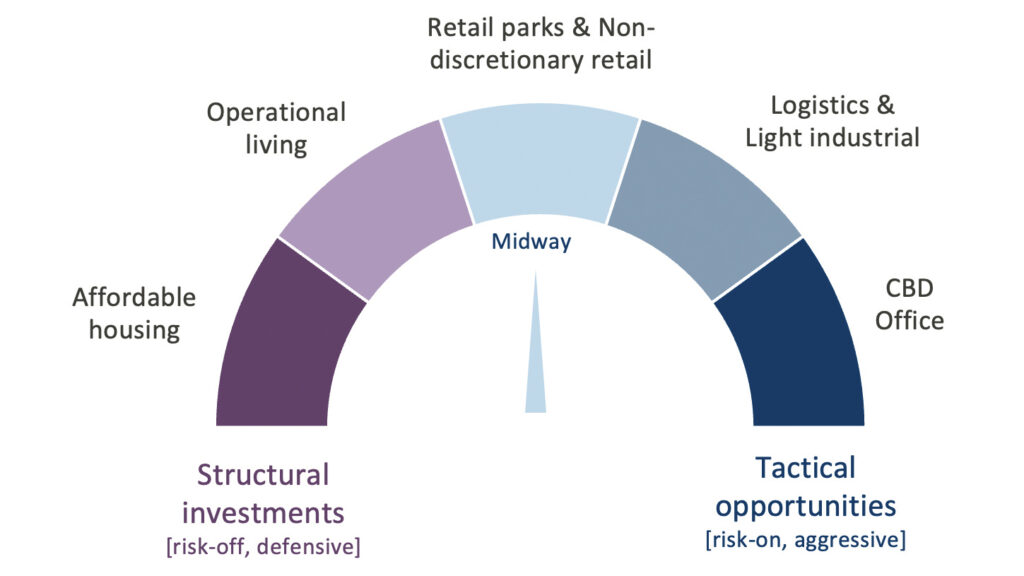
To frame this outlook, Catella convened its first pan-European House View to define the high conviction themes for the year ahead. The recommendations are organised into two complementary perspectives: Structural investments and Tactical opportunities.
While defensive strategies are vital, timing matters. Market dislocations are narrow, and liquidity is improving. Acting early allows investors to capture quality assets at attractive entry points before competition intensifies. 2026 offers a rare vintage year – those who move decisively and align with structural trends will be best positioned for recovery and long-term outperformance.
To underscore the need for the defensive stance while achieving strong performance at the same time, all recommendations emphasise the importance of income stability. Strong net operating income (NOI) prospects will be essential, as investors can no longer rely on the sharp yield compression seen in previous cycles.

Secondly, generating income will increasingly depend on more intensive operational management. Operationally intensive assets – those meeting evolving occupier needs and generating income through active asset management – offer a compelling route to value creation and provides a buffer against cyclical volatility.
Affordable housing as a non-negotiable priority
Affordable housing is more than an imperative – it is a structural necessity of Europe’s residential markets. Vacancy rates remain chronically low, while development pipelines are constrained by land scarcity and regulatory complexity. The higher financing costs, amongst other factors, have pushed residential demand towards rental housing. This imbalance creates a clear opportunity: predictable long-term income at near-full occupancy – even during economic uncertainty.
Operational living as a build-to-scale mandate
Operational living spans flexible living concepts across all age groups such as student housing, co-living, micro-living, serviced apartments and senior housing. These niches share common traits: strong demand for smaller units in dense urban areas, short rental cycles offering flexibility, and dynamic pricing models that allow rapid inflation pass-through. Structural drivers such as ageing populations, demographic shifts, evolving lifestyles, and digitalisation further reinforce this strategy.
Balancing retail and logistics as a dual strategy
Retail and logistics are equally important pillars of omni-channel retailing. Together, they form a modern ecosystem, balancing consumer-facing nodes with fulfilment infrastructure. Retail is resurfacing after a decade of sharp decline, offering high-income returns. In logistics, long-term fundamentals remain solid: continuous e-commerce penetration, logistics network reconfiguration and increasing demand for near-shoring and manufacturing drive our strategic conviction across the whole supply chain.
Cherry picking within CBD offices
The ongoing “flight to quality” continues to support demand for central locations. Moreover, sustainability compliance is no longer optional: green-certified offices command rental premium and enjoy higher occupancy. This is set against a backdrop where overall take-up remains constrained, and business productivity is to become an important driver of growth as AI and tech-related investments accelerate.
In summary, 2026 is not a year for blanket strategies. Investors who act decisively, embed sustainability, and focus on sectors aligned with demographic and technological trends will position portfolios for recovery and long-term outperformance. Returns will hinge on income resilience and operational intensity.
Attractive opportunities lie in affordable housing and operational living for structural growth; selective retail for tactical plays; and sustainability-led office repositioning for value preservation. Logistics fundamentals remain strong, favouring the reconfiguration of supply chain network and investment in light industrial assets.