

Achieving net zero in desert climates
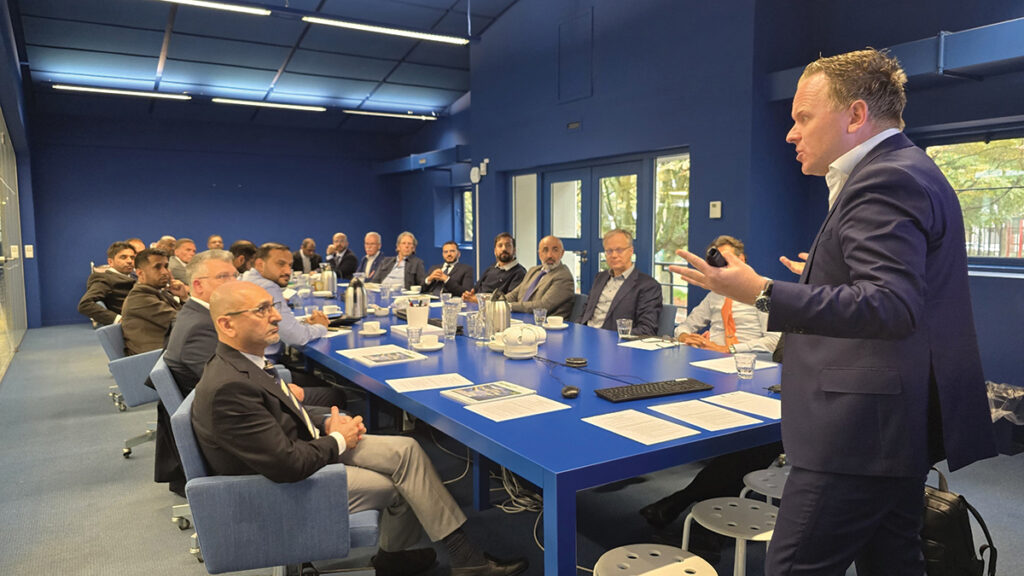
A high-level meeting between Dutch experts and a Gulf delegation focused on practical solutions for a sustainable built environment.
International collaboration to reach net zero in the built environment took an important step forward with the recent official visit to the Netherlands by an executive delegation from the Kingdom of Saudi Arabia and from Oman.
The visit, organised by the Climate Neutral Real Estate (CNRE) consortium, the Gulf region programme and the International Enterprise Department of the Dutch Ministry of Foreign Affairs, focused on the particular challenges of achieving net zero in desert climates.
The discussion among the delegates and the many experts who attended the event showed how international collaboration can facilitate innovation and the spread of the net-zero philosophy, particularly in relation to buildings and neighbourhoods.
Given the global urgency, such collaboration accelerates innovation, knowledge transfer and adoption.
André Vreman, chairman, and others from CNRE illustrated the focus areas of the consortium: enhanced design, cooling, water systems, smart technologies, energy and building-integrated solar panels, aesthetics, functionality and wellbeing.
Climate neutrality
The broader mission of CNRE is reducing carbon emissions, increasing asset value, fostering green finance and achieving net-zero goals. The expertise in the built environment it draws upon validates its mission with a scientific approach, and safeguards the integrity of new developments.
The roundtable with the Gulf region delegation focused on practical solutions to achieve climate neutrality in real estate in desert environments. Delegates agreed that a shared vision is important in order to take concrete steps towards the net-zero goal in real estate.
The Gulf delegates’ priorities were finding strategies for achieving and maintaining carbon neutrality in urban development; sharing best practice in environmental, social and governance reporting for the real estate sector; balancing refurbishments and upgrades to existing structures with new sustainable developments; and exploring resilience strategies for managing flood risks within climate-neutral developments.
“The goal of the roundtable was producing actionable strategies, sharing best practice and strengthening international partnerships,” said Pamela Shehu, programme manager at Dutch Energy Solutions, a collaboration between energy solution suppliers, R&D companies, associations and governmental bodies.
“International cooperation can facilitate innovation, as well as the spread and adoption of the net-zero philosophy, particularly in relation to the built environment. Partnerships lead to implementation, connectivity and sustainability.”
