

CEE Summit: Hungary is ready for a ‘great journey of growth’
Hungary is on an upward path following its change of government after the recent elections, delegates heard at the CEE Summit, organised by Real Asset Media and The Poland Observer, which took place recently in Warsaw.
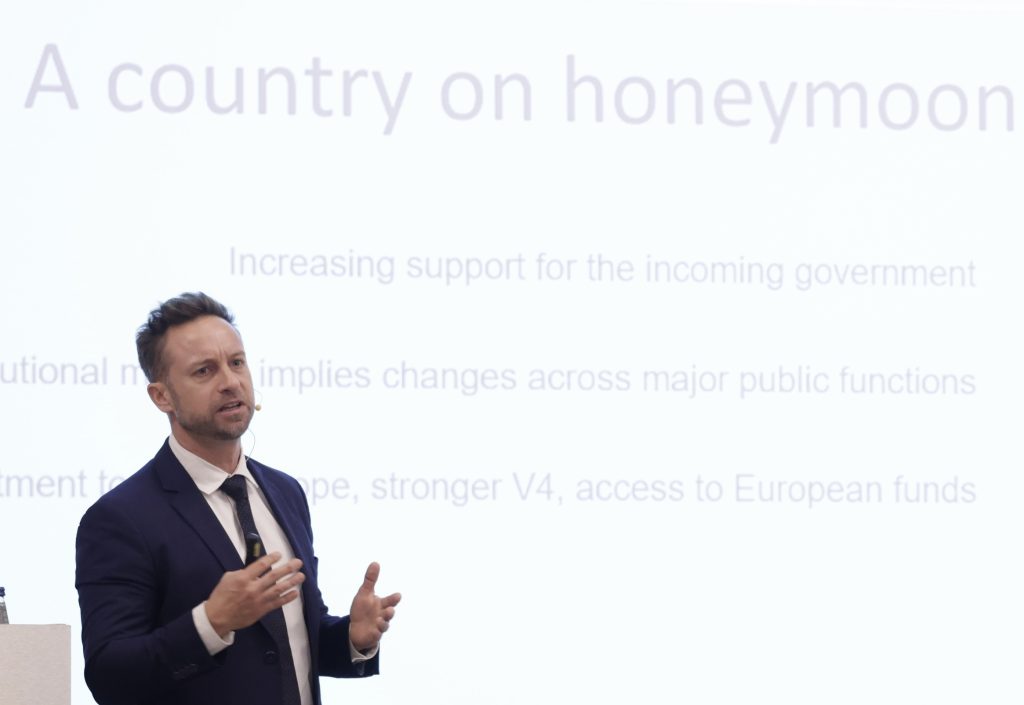
“We voted out Orbán after 16 tough years in power and we are literally in a fiesta mood”, said Gábor Borbély, Senior Director, Head of Research CEE, Head of Research Hungary, CBRE, in his keynote presentation on “The CEE Real Estate Market with a special focus on Hungary.”
The new government is extremely popular, still in its honeymoon period, and investors’ sentiment towards Hungary has changed almost overnight. “We get phone calls from all over Europe”, he said. “The forint has become the strongest currency in Europe and in one month the bond yields compressed by almost 200 bps. There has been an immediate impact on the markets, but it will take time for the benefits to filter through to the real economy.”
There is a lot of work to be done, starting with fiscal consolidation, accountability, transparency and implementing consistent economic policies like Poland has done.
“I want to highlight three words: resilience, independence and growth”, said Borbély. “We can clearly see that investors prefer to go into markets and asset classes that are resilient. We see that the residential sector is dominant in Western Europe, and we see an increase in health care investments.”
As for independence, it is closely connected to resilience, he said: “The first thing that springs to mind now is energy independence, but financial independence is equally important. What we have seen in this region is an absolutely stunning accumulation of domestic wealth and intra-regional capital. We see that regional players account for two thirds of real estate market activity in CEE, and Europeans account for another third.”
This feeds back into resilience, because it means the region can withstand another global shock better, and it also feeds growth. “This year we expect double the volume of capital to be deployed into real estate, which is an incredible growth story”, Borbély said. “It is the growth story investors are buying into, because CEE cities and economies are outperforming their Western European peers.”
Looking at asset classes, office completions are being accelerated, even if half of the pipeline for 2026 is in Budapest. “It is a legacy of the outgoing government, which built for itself an overpriced and oversized governmental district”, he said. “Otherwise the pipeline will not recover until 2027.”
In all cities, the trend is to go central and to go green: demand is high in central Prague, Warsaw and Bucharest, as long as the assets are best in class, sustainable, high tech and in the most desirable locations.
Industrial & Logistics has had its ups and downs, but the sector has three key drivers, Borbély said: one is friendshoring, to the largest consumer market; the second is the just in case inventory policies that have replaced just in time; and the third is the growth of the retail sector.
“Retail and domestic consumption is a massive driver for all economies in the region and will continue to be a strong story”, he said. “Another driver is the growth of tourism, which sees Budapest on top but which extends to other capitals and to tier two and tier three cities, which are getting more connected to the rest of Europe.”
This presents a clear opportunity for hotel suppliers, hotel operators, as well as being an incentive to build new hotel developments.
So the bottom line is that “there is an immense potential to be unlocked in the region and many ways to unleash this growth potential”, Borbély concluded. “We can embark together on this great journey of growth.”


