

Frankfurt’s dominance of data centre market in Germany threatened by power issues
Frankfurt will continue to dominate the data centre market in Germany but other locations are emerging as demand grows, delegates heard at Real Asset Media’s ‘Data centres: Capital & Opportunities in Europe’ investment briefing, which was hosted by PwC at their offices in Frankfurt.
“Frankfurt is the preferred location and will remain so for the next ten years, but access to land and access to power are limiting factors”, said Michael Dada, Independent Data Centre Consultant, German Datacenter Association.
The city is seen as a prime location because of its great connectivity and latency, which matter in the age of AI, but it also has significant power constraints.
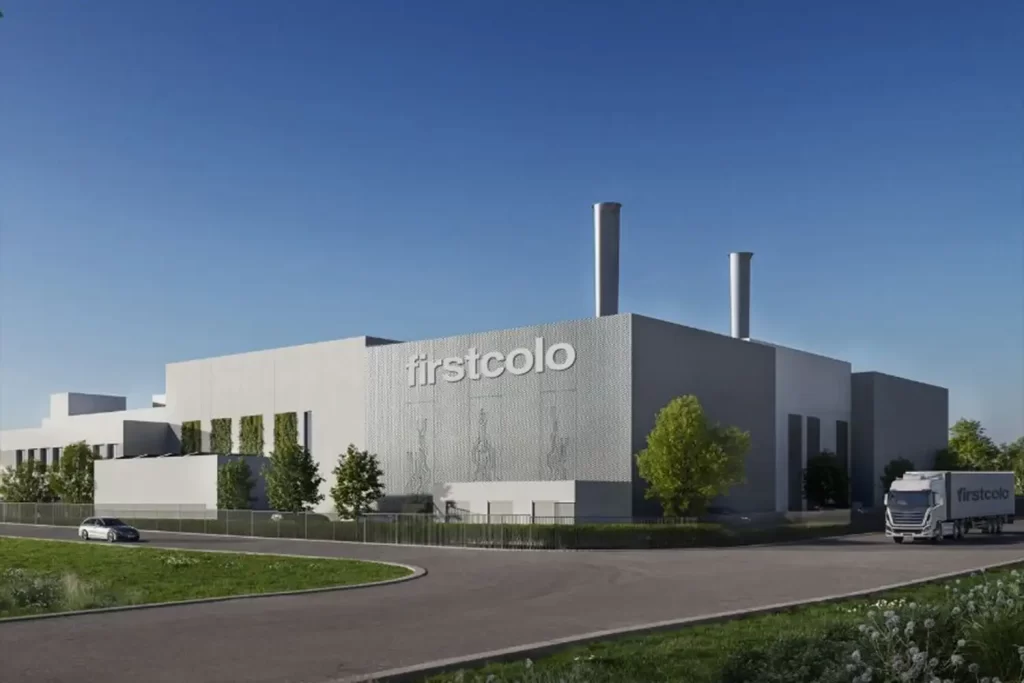
“We are Frankfurt-based, we operate two data centres in the city and would love to grow but power scarcity is an issue,” said Jerome Evans, Founder & CEO, firstcolo Datacenters. “We have been told to wait ten years, so we are developing 25 kms away and investing €250 million super modern data centre that will be ready by the end of 2027. In the next four year we plan to invest up to €1 billion in the sector.”
Frankfurt is an easy market to be in because it has established customer demand and plenty of liquidity, but investors will have to cast their net wider in order to access the power they need.
“Some projects are coming up in Berlin, Microsoft has chosen a location near Cologne, Hamburg is making slow progress and everyone is looking for the next hot spot”, said Dada. “Germany is a decentralised country and places will develop at different speeds, while large-scale developers will have to look at more remote locations like Northern Germany.”
The United States, which is ten years ahead, followed a similar pattern: North Carolina was and remains the main hub but the issue of power has forced operators to look at Nevada, Texas and also California.
“Energy is the biggest limiting factor”, said Frank Noé, Head of Capital Formation, Primevest Capital Partners. “A data centre without the grid is just an expensive warehouse.”
Various solutions are being found to deal with the problem. “Developers need to be creative, so we’ve entered into a joint venture with an energy supplier”, said Noé. “We also work with local partners on smaller data centres, because it is not all about hyperscalers but you need to be closer to the end user, and we adapt existing structures because retrofitting is quicker than a greenfield development.”
Tech improvements and energy efficiency requirements, clearly set out by German legislation, will also address the power question.
“The cooling systems are evolving very fast, using less water”, said Thomas Veith, Partner, Global Real Estate Leader, PwC. “The use of energy will be reduced as well, more renewable energy will be used and battery storage will get better. Data centres have evolved a lot from a sustainability perspective.”
These credentials also make data centres more palatable to local authorities and communities and will help their expansion across Germany.
“For local communities ESG is a non-negotiable requirement”, said Noé. “But also the more sustainable you are, the more resilient you are, which is positive for cashflow as well as the planet.”
Aesthetics and nature can also play their part. “I emphasised to the municipality that we wanted to build a beautiful data centre, with a nice façade and lots of greenery. It doesn’t increase the cost by much, but it makes it more acceptable to the community so it is worth doing. Sustainability is very important to us so it has to be very efficient as well.”


