

Data centres in Europe: strong demand but supply constraints
Data centres are in strong demand in Europe but building them is becoming ever more difficult, delegates heard at this week’s Real Asset Media’s Data centres: Capital & Opportunities in Europe, which was hosted by PwC at their offices in Frankfurt.
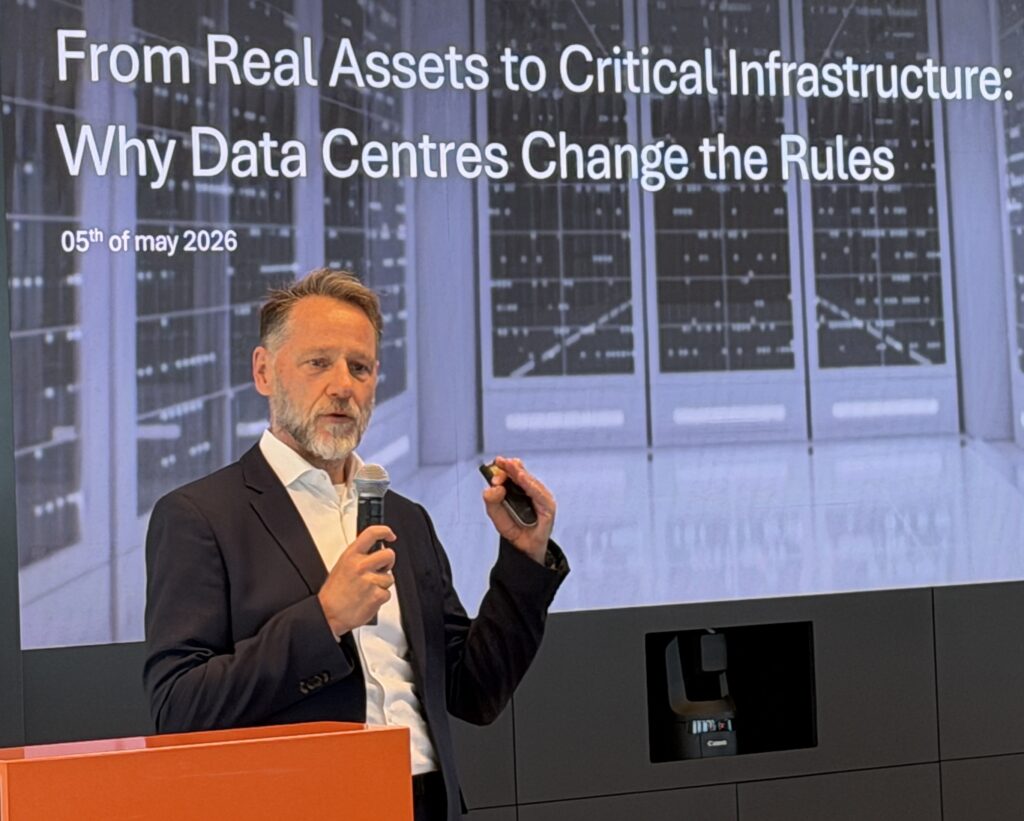
“Data centres are evolving into a core pillar of global infrastructure, creating a large scale and long-term investment opportunity”, said Thomas Veith, Partner, Global Real Estate Leader, PwC Germany, in his keynote address on ‘From real assets to critical infrastructure: why data centres change the rules.”
A new critical asset class is being created which is AI-driven but energy-constrained and is at the intersection of planning and geopolitics. There are four interlocking drivers behind the growing interest in data centres, he said: geopolitics, AI & computing power, the digitalisation of the real economy and national and regional location changes.
“Demand is growing in Europe but supply is constrained”, said Veith. “Delivery challenges continue to drive overruns in schedules and cost, with some data centres developments seeing 200% escalation in capex costs.”
For cost reasons, as well as planning issues as some municipalities are opposed to data centres, brownfields are increasingly seen as a solution to development constraints. Converting sites such as power stations, industrial sites or telephone exchanges to data centres can save up to 40% capex compared to a greenfield development, according to PwC.
“Building a data centre is becoming more and more challenging”, said Veith. “Timing and capex can be really out of control in some cases. Supply chains are broken, and all it takes is a missing piece to block the whole project.”
It is likely that Europe will see more diversification of data centres, not just hyperscalers but different types, sizes and solutions that fit the local market.
Germany can give an indication of Europe’s direction of travel: the Government has presented a new strategy to enable sustainable growth and investment in strategic digital infrastructure.
The strategy has a sustainability focus with the aim of increasing the share of renewable energy, enforcing strict efficiency requirement and integrating into energy systems. It also addresses energy and grid infrastructure, ensuring there is sufficient power availability and grid connection and providing support for grid expansion and energy storage solutions.
The plan is also to accelerate planning and approval processes and the designation of suitable sites. The investment framework will be improved, with better regulatory conditions and targeted incentives for innovative and energy-efficient data centres.
“The focus is on sustainability but also connectivity”, said Veith. “The Government wants it to work, and that is a positive message, but delivery is always a challenge.”
The ultimate goal is achieving digital sovereignty and security, promoting high-performance European cloud & data infrastructure and high standards for IT security and resilience.
Within Germany, Frankfurt continues to play a significant role with top-tier data centres and remains the primary hub for capacity and connectivity. However, other major cities like Berlin, Munich and Stuttgart are catching up.
“Germany currently ranks second worldwide with 529 data centres after the US that has over 5,000”, said Veith. “However, the development pipeline in China and the US exceeds that of the EU several times over.”


