

Renewed shift to defence will drive logistics demand
Logistics is set for a resurgence across Europe as countries ramp up defence spending, fuelling demand for warehousing and ancillary services. Nicol Dynes reports.
Europe’s defence industries are gearing up to make the continent more self-sufficient in the face of growing global tensions. Germany alone is set to spend €1 trillion to bolster its capabilities – and other countries are set to follow with increased proportions of GDP assigned to defence.
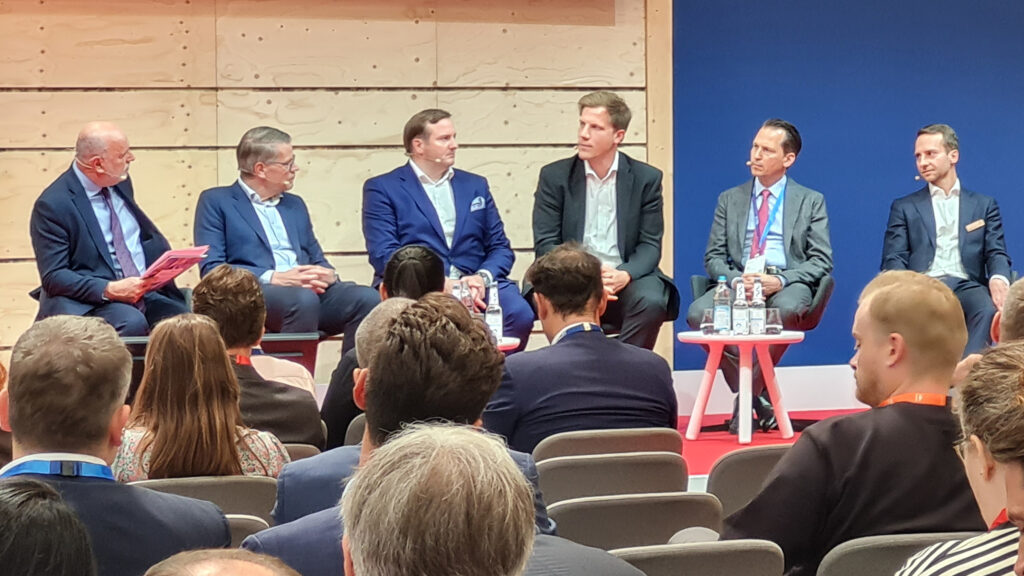
As Europe expands its defence capabilities, light industrial will be one of the key beneficiaries, experts agreed at Real Asset Media’s ‘Locations of the future: key trends driving logistics real estate’ briefing, which took place in Munich.
“Autonomy and self-resilience have become great themes in Europe, and logistics is absolutely key to this shift,” said Edward Plumley, director of EMEA capital markets and co-head of the industrial & logistics practice group at Colliers. “These are trends that were already there, but they keep accelerating.”
“Defence is not just tanks and aircraft,” added Raimund Paetzmann, managing partner of warehouse operator and developer Logivalue. “Think drones, munitions, backpacks, uniforms or boots. Light industrial will definitely be a growth area.” This will mean more factories and warehouses for defence purposes across Germany and other European countries.
“I would opt for locations that have interesting prospects, like Bremen. I think the port will be crucial, so taking a long-term view, it will become a strong logistics market.”
Maximilian von Medem, Union Investment

The current geopolitical situation is leading companies to shift to friendlier countries that are also closer to their customers. “The trade network is becoming more Europe-focused,” said Maximilian von Medem, investment manager for logistics in DACH at Union Investment. “So there is a big consolidation underway to improve the supply chain and do friend-shoring.”
But this trend to look for space in Europe is not confined to European companies. “Defence will be a big driver of logistics, but not the only one,” said Kilian Mahler, managing partner at investment manager Periskop Logistics. “We are also seeing increased demand from Chinese and Asian companies that want to come to Germany.”
Asian demand
Asian companies also want to be closer to their customers and are reconfiguring their supply chains, said Pascal Laucht, senior investment manager of logistics at Swiss Life Asset Managers. “A lot of Asian companies are looking for space in Germany, especially in the e-commerce sector, so demand is increasing.”
Another sector that is set to become more important is infrastructure, from airports to ports to motorways. “Areas in Germany near the Dutch ports are really attractive, and one location to watch is Wilhelmshaven, which is the only deep-water port in Germany,” said Mahler.
“All the developments around infrastructure nodes, especially ports from Marseille to Gdansk to the UK Thames Gateway, will become more important,” added Plumley. “Industrial outdoor logistics (IOS) is an undervalued area of [the sector] that is set to grow.”

“Defence will be a big driver of logistics, but not the only one. We are also seeing increased demand from Chinese and Asian companies that want to come to Germany.”
Kilian Mahler, Periskop Logistics
Whether it is a big box or last-mile hub, industrial or logistics asset, the panellists agreed that choice of location is more important than ever in the highly competitive sector. But they had different views on the best places to invest: for example, whether to focus on expensive locations such as Munich, which has already seen massive rental growth, or to bet on places that have so far been overlooked.
“Some markets, like Munich, are too overheated,” said von Medem. “I would opt for locations that may have a bad name, but have interesting prospects, like Bremen. Vacancies are high now, but I think the port will be crucial, so taking a long-term view, it will become a strong logistics market.”
On the other hand, in-demand places can count on a strong customer base and interest from banks and tenants. “I would choose to split investments across more locations, but choosing space-constrained places like Munich or Stuttgart,” said Laucht. “Frankfurt has just seen big rent increases, there are
no vacancies and no land available for new developments.”
Infrastructure becomes critical
Geography, infrastructure and market conditions are not the only factors to take into consideration when choosing the right location. For example, “power supply is a very important factor that needs to be checked before choosing a location”, said Mahler. Grid capacity and the availability of power can be patchy, at a time when highly automated logistics facilities demand ever more power.
“It may seem that environmental concerns have taken a back seat in this era of tariffs as people are more cost-conscious,” said Plumley. “But it is a fact that EV charging or solar panels have become standard for developers. We have a partnership with VerusSol that includes energy in the rent as a green solution. It costs less so tenants are happy and it benefits everyone.”
“A lot of Asian companies are looking for space in Germany, especially in the e-commerce sector, so demand is increasing.”
Pascal Laucht, Swiss Life Asset Managers

If tenants know they are getting a regular energy supply as well as saving money, they are more likely to favour ESG compliance. The same goes for local authorities and communities, who are more accepting of logistics developments if they are green.
“It is not just tenants but also banks and institutional investors who are driving the green agenda, because there is no financing available unless the development has solar panels and
heat pumps,” said Periskop Logistics’ Mahler. “I am sure that Europe will not follow the US.”
Resurgent logistics crucial for Europe

“There is an 18-month window of opportunity now to build logistics assets,” said Logivalue’s Raimund Paetzmann. “After that, it will be impossible to find land, because competition will only become more intense.”
Several factors are contributing to the resurgence of logistics as a strategically important sector, including the competition for land and power from data centres, the restructuring of supply chains and the nearshoring trend, as well as the renewed focus on defence capabilities across Europe.
“The regionalising of supply chains is a clear trend, because companies want to be closer to their markets,” said Paetzmann. “This will benefit low-cost countries like Portugal and also CEE.”
If Poland is a favourite choice for nearshoring, the Czech Republic is emerging as a centre for automation and Romania is also sought-after for its proximity value. “Hungary could play an important role as a defence and R&D cluster, but that depends on politics, the government will have to decide which side they’re on,” Paetzmann said. “Poland will also be the base for the rebuilding of Ukraine, hopefully in the not-too-distant future.”
In many European countries, data centres are already in fierce competition with logistics for every piece of land, as well as for all the power available. “Data centres are land-hungry and power-hungry, it is not certain that we can accommodate them,” he said.
Paetzmann’s plea is for local authorities to recognise the importance of logistics to the economy and give the green light to new developments. “Logistics sits at the heart of Europe’s new industrial agenda and its resilience is crucial,” he said.
