

Planon RE: Selecting the right data is key to scenario planning
Selecting what is relevant sifting through the avalanche of information and data available is a crucial skill, experts agreed at the ‘Prevention vs Reaction: How Data Control Enables Better Investment Decisions’ webinar, organised by Real Asset Media in partnership with Planon Real Estate.

“We filter what could have an impact on the cash flow and what will not”, said Marlijn Hanna, Associate, Asset Management, Edmond de Rothschild. “We focus on our own investment value based on the expected 10-year cash flow. We try to increase the investment value by active asset management, which we do control, while the market is an aspect we cannot control. We now base or hold/sell strategies on our own future cash flows and less on the valuations. We try to analyse any potential red flags as soon as possible by doing due diligence.”
Everyone would agree that prevention is better than cure, but it can be difficult to ascertain what the risks could be and what actions are needed now that will pay dividends later.
In order to avoid nasty surprises later, there are questions investors should ask at an early stage to be prepared, said Daan Berghmans, Solution Director, Planon Real Estate: “There are non-financial risks that are not extracted from a rent roll. AI can access town planning, environmental data, market research and so on that can show risks and opportunities and get insights in these risks.”
Scenario planning is a must, for example on ESG matters. You plan what following the CRREM pathway, improving energy efficiency, future proofing the asset means, then you add capex and expected capital growth and decide if the project is financially feasible or not. According to Berghmans, “if you add the operational side into account, something that did not seem viable can become viable.”
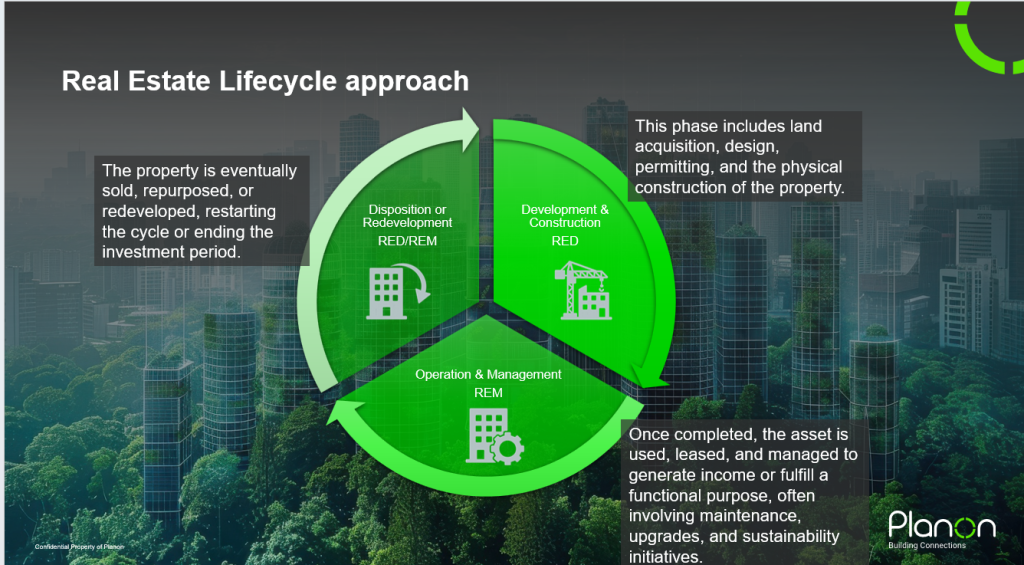
Implementation of ESG measures is now seen as key driver for asset value and is integrated as part of the underwriting, but its benefits are often underestimated as the focus tends to be on its costs.
“Next to the business scenarios, we also run ESG scenarios where we include sustainability-related projects”, said Hanna. “This is becoming more important in the decision-making process. As sustainability has become a key factor in investments, these scenarios in general are playing a bigger role today. What we are seeing is that the costs budgeted for these improvements are often underestimated, as they tend to be higher than initially expected. At the same time, the potential upside of these investments, such as higher rents or lower yields, is also often underestimated. These effects become very clear in scenario analysis, but they are not always fully reflected in traditional valuation reports.”
All the associated risks, such as inflation at country and city level, the likelihood of a tenant staying or leaving, and the time and cost required to re-lease the asset, are taken into consideration. The technical asset manager focuses on maintenance costs and capex per asset, and discusses these with the property manager. The process of bringing together all aspects and risks is time-consuming and requires input from different people.
It all boils down to having reliable data and having those data under control. “Having data under control means understanding data definitions”, said Berghmans. “Another crucial issue is understanding and analyzing data, which advanced data analytic tools and the help of AI can facilitate. With the right software, the process is guaranteed: everybody works in the same model by which the data is enhanced and verified in each step instead.”


