CEE Summit: Poland wakes up to senior housing opportunity
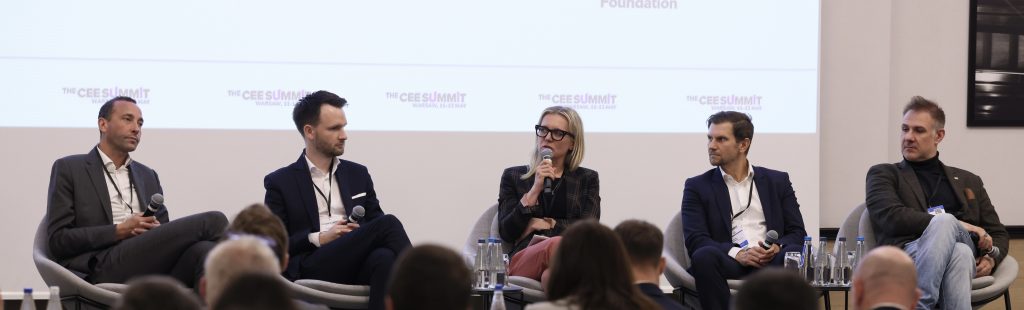
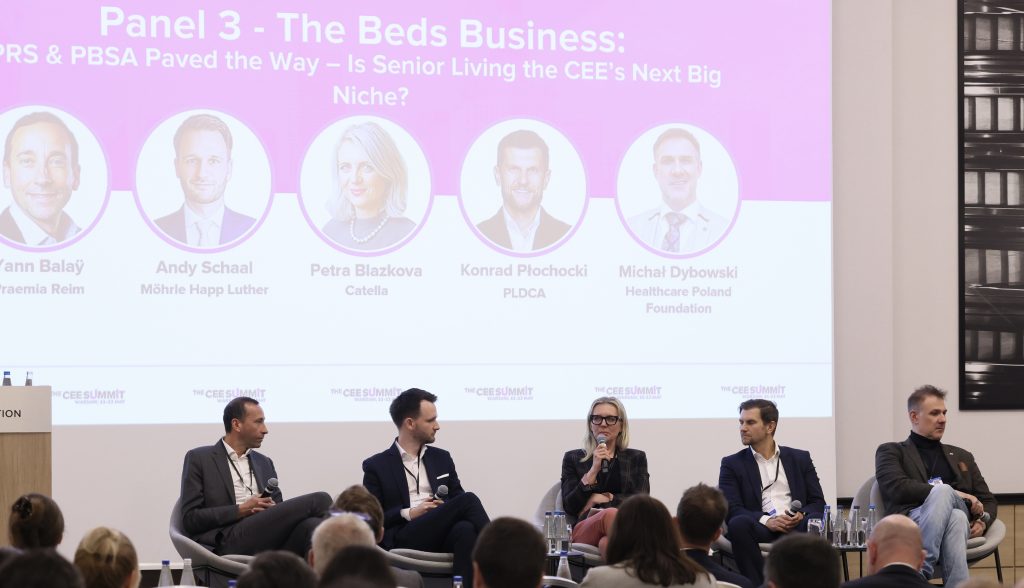
Poland is waking up to the opportunity senior housing offers as demand from neighbouring countries increases, experts agreed at the ‘The Beds Business: PRS & PBSA Paved the Way – Is Senior Living the CEE’s Next Big Niche?’ panel at the recent CEE Summit in Warsaw, which was organised by Real Asset Media and The Poland Observer.
¨Poland builds about 60 long-term care facilities annually, part of which is for foreign nationals¨, said Michał Dybowski, President, Healthcare Poland Foundation. ¨In Germany, for example, regulations are much stricter on new buildings and demand is high, so Poland is offering services to German seniors in the language and to the standards they expect.¨
However, Poland is not building enough to meet future demand. The expectation is that 100,000 beds will be needed in the next five years.
¨If you take into consideration that we have a total of 700,000 beds in the entire hospital sector, that shows the scale of what is needed, taking into account demand from Polish nationals and foreigners¨, said Dybowski.
¨The German market is highly regulated, even if senior housing is less heavily regulated than nursing homes¨, said Andy Schaal, Partner, Attorney-at-Law, Möhrle Happ Luther. ¨International investors are still looking for other markets and the CEE region could become a niche, as it has a distinct advantage. In Germany we have 16 different building regulations in every federal state. So for example, if you invest in Berlin, you can have totally different regulations for Brandenburg. And so if your nursing home is one kilometre to the west, it could be under totally different building regulations. Having one regulation in one country could be a real advantage for Poland.¨
The number of people over the age of 85 is expected to double by 2050, so there is no debate about the need to build new facilities for senior living and nursing homes. According to recent CBRE figures, investment in the healthcare sector in Europe reached 20 billion euros, the majority of which was in the UK, in the nursing home segment and into already existing assets.
¨The senior living segment is quite niche and has come to a halt in the last few years because of rising construction costs, higher interest rates, and some issues about regulation¨, said Yann Balaÿ, Director of Investment Healthcare & Education, Praemia Reim. ¨The number of new development projects has dropped drastically. Personally, I do not see how this situation could improve in the next months or years to meet investors’ expectations.¨
What is needed is first to have investors coming back to the market with a much more long-term view and second to have lower construction costs to encourage new developments.
¨Unfortunately, this is exactly what is not happening across Europe, as technical standards are getting more stringent and construction costs are going up¨, said Konrad Plochocki, Managing Director, Polish Association of Developers. ¨As for attracting foreign pensioners, I think that if a retired German person wants to go somewhere, the first choice would be Spain or Portugal rather than Poland.¨
But Poland has a few aces up its sleeve: there are interesting experiments underway, and there is a lot of capital from Poles who have lived and worked abroad, especially in the UK, have moved back to their home country and are willing to invest in the sector.
¨One interesting experiment is in the seaside city of Gdynia, which wants to become a HRF, or happy retirement hub¨, said Plochocki. ¨The city wants to promote itself as a place where rich Poles should retire and is sending a clear signal to developers: we want you to build those kinds of buildings in Gdynia and attract people who want to spend their latter years here.¨
Another simple model that is taking hold in Poland is a fully managed service that allows people to rent out their homes to pay for their stay in a senior living complex without having to sell their property. They or their children do not need to look after it, and the rent covers pretty much everything, the fees and service charges.
¨Another interesting development is that some of the 520 hospitals in the Polish Hospital Federation, mainly owned by the state, are transforming some of their wards dedicating them to long-term care with hospital support¨, said Dybowski. ¨So they are a kind of nursing home, but in a hospital ward. These units are becoming very profitable to manage, because not only is the National Health Services paying the cost, but social services are contributing either from the elderly or disabled person’s pension.¨
It seems Poland is avoiding the mistake made by some European countries and, before that, by Japan of not realising the need for senior housing schemes and opposing them in principle.
¨When talking about senior living we need to talk about the demographics, just to put it in context¨, said Petra Blazkova, Head of Research & Strategy, Catella. ¨I think we need to look at Japan first, the oldest nation in the world. A quarter of the population there is over 65 years old. But 10, 15 years ago senior housing was still culturally unacceptable in Japan, and I think that cultural acceptance is a bit of an issue for us in Europe as well.¨
What happened was that some of the international institutional money went to Japan, saw the demographic trends, and made a brave move: they built the facilities, they built the assets, and people came and perceptions changed.
¨Now it is one of the largest or fastest growing sectors in Japan, both from an institutional and a development perspective¨, Blazkova said. ¨So I think that there are lessons to be learned from what is happening in Japan for us in Europe. Maybe not in Poland as it is a relatively young country, but certainly in other European countries like Germany or Italy, where it is a much more obvious issue which needs to be dealt with quickly.¨