

Mipim briefing: more foreign investors interested in German market
Foreign investors are showing renewed interest in the German market but sentiment inside the country is not positive, experts agreed at Real Asset Media’s Germany: Real Estate Investment Outlook briefing, which took place at the Insight Stage, International Investors’ Lounge at Mipim on Tuesday.
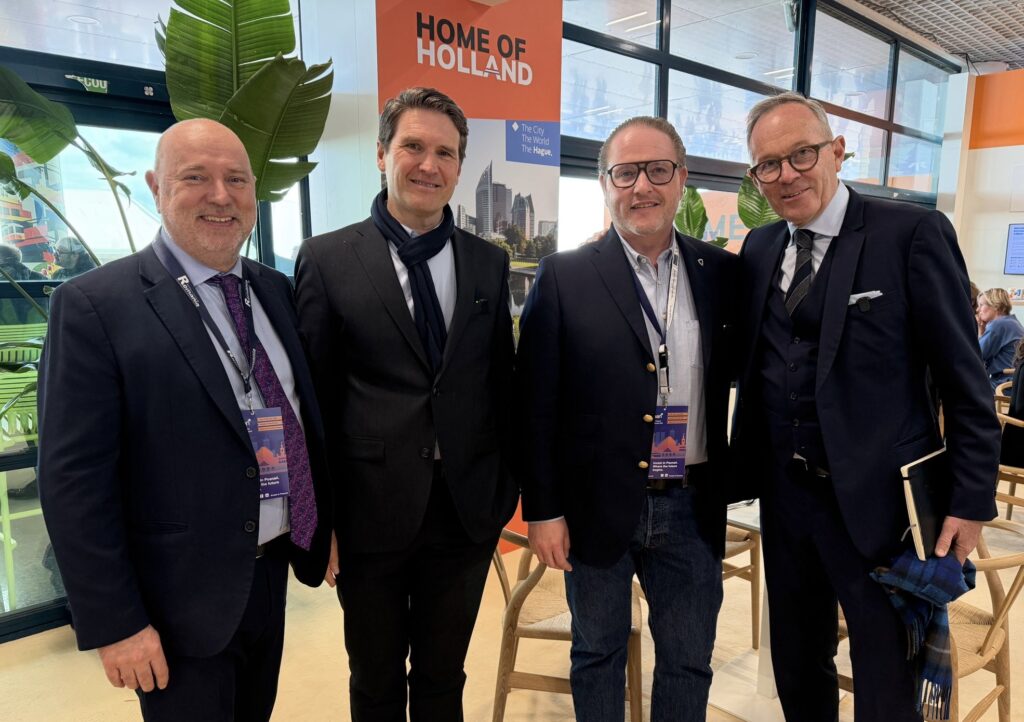
“I have just come back from the US and investors there are very interested in deploying capital in Europe in general and in Germany in particular”, said Tobias Schultheiß, Managing Partner, Blackbird Real Estate. “Also French open-ended real estate funds are coming to Germany looking for higher yields outside of France.”
From abroad, Germany is seen as the third economy in the world, a stable country with high-quality assets and many opportunities to be found. The perception is different from inside the country.
“The mood in Germany is negative”, said Wulf Meinel, Founding Partner, StoneVest. “We have headwinds like an ageing demographic, an infrastructure backlog and a burdensome bureaucracy and we need to tackle them.”
At a time of crisis there are always opportunities to be found, said Schultheiß, but “in Germany we always see the glass half empty, which is not a constructive attitude.”
The first problem to tackle is high construction costs, said Johannes Lichtenthaler, Head of (Service) Development and Investment, Drees & Sommer: “They have gone up 30%, making most projects unviable at a time when we need more buildings for housing and for other asset classes as well. We need to offer the market solutions.”
The combination of high construction costs, high land prices and the difficulty in getting permits is acting as a brake to development and can also deter foreign investors.
“One developer told me it took him ten years to get permits to build his own HQ”, said Schultheiß. “In Singapore it takes 30 days.”
Looking at sectors, the lack of housing makes residential a sure bet. “It will be the main engine of growth in real estate for the next two years”, said Lichtenthaler, provided the problems highlighted above can be solved to bridge the gap between supply and demand.
The office market is in recovery mode but extremely polarized. “There is high demand for high-quality space and we are seeinbg low vacancies and growing rents, but only in the CBD”, said Schultheiß.
The industrial and logistics sector has grown a lot since the pandemic but it is still going strong. “The problem is lack of product, and shortages lead to higher rents, but even logistics tenants have a limited ability to pay ever more, so there is a bottleneck there”, said Meinel.


