

Briefing: inflation hedge aspect adds to investors’ interest in senior housing and healthcare
The senior housing and healthcare sector is not just driven by demographics but is also seen as an inflation hedge, delegates heard at the Later Living and Healthcare briefing, organised by Real Asset Media and Sociëteit Vastgoed and hosted by CMS at their Amsterdam headquarters.
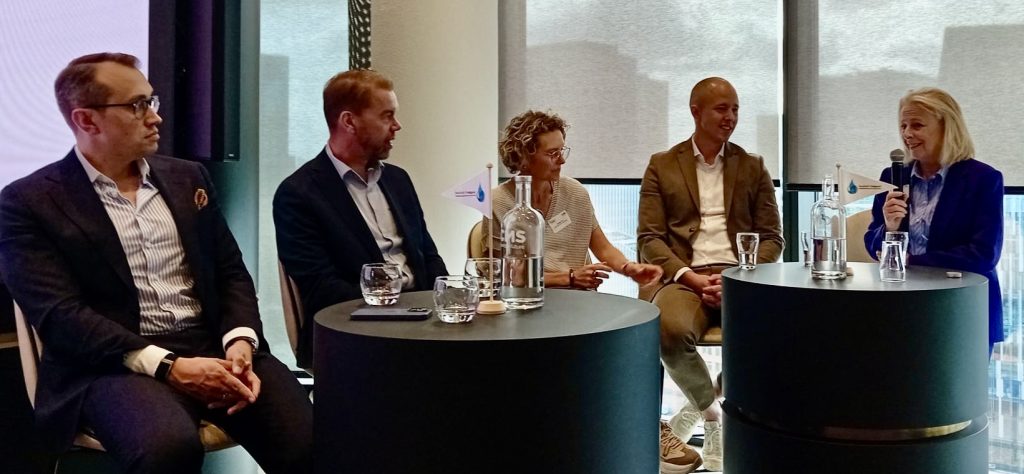
“Demand is rising while the delivery model is under pressure, the need is not just growing but deepening and existing provision is not keeping pace with requirements”, said Candice Blackwood, Partner Real Estate Healthcare & Co-Head of Life Sciences and Healthcare, CMS.
The first baby boomers are now in their 80s and the numbers of people needing needing care or wanting to move into senior housing will only increase.
Investors, especially private equity companies, have woken up to the opportunities the sector offers and see is as positive diversification, defensive exposure and an inflation hedge. In an otherwise slow market, substantial deals and acquisitions are being done.
“Recent deals in the UK, in Germany and elsewhere in Europe show capital moving across care platforms and real estate and activity spans clinical platforms and care operations”, said Blackwood. “Capital is converging on assets and resilient care demand. We expect private equity involvement and M&A activity to strengthen.”
There are opportunities across all care assets, from medical office buildings to social care, from acute and specialist hospitals to care homes, from rehabilitation and treatment centres to labs and diagnostics and from senior housing to supported living.
“People want choice and that is why the market is diversifying”, said Kip Sloane, Managing Director, SCHÖNES LEBEN Group. “Senior housing does not need to look and feel like an old people’s home.”
Regulations can be a real brake to investment. “They say in Germany it is easier to open a power plant than a nursing home”, said Wellens. “Regulation is necessary but it runs the risk of overkill.”
But there are ways around it, as Sloane explained: “In our later living facilities we have mobile teams that go into the homes to offer care when necessary, so that all needs are catered for on site and people don’t need to move out. This also means our homes fall out of the tough regulatory schemes for nursing homes in Germany.”
Artificial intelligence has a big role to play in the sector, experts agreed. “AI is not seen as a threat but as a resource”, said Blackwood.
“As an investor you need to use AI otherwise you will fall behind”, said Alexander Fröse, Founder and Managing Partner, Periskop Living / Periskop Partners. AI is widely used to keep and update data bases, for example, and makes vast amounts of information easily accessible.
“It is not easy to adapt to change, but technology needs to be implemented correctly, and you need a good operator to do that”, said Geertjen Pot, Director, Amfora Real Estate Consultancy.
But in this sector as in others there must always be a human in the loop. “We need a mix of technology and creativity”, said Geert Wellens, Founder & Chairman of the board, Triginta. “AI can solve a lot of problems but it must be used correctly to provide better care, not to replace human care. The goal is the qualitative improvement of healthcare.”


