

European Outlook 2026: real estate sector is ‘facing reality’
The real estate sector is becoming more pragmatic and more proactive in the face of growing geopolitical uncertainty, delegates heard at Real Asset Media’s ‘European Outlook 2026 – Germany: emerging trends and opportunities’ briefing, which took place on Wednesday in Frankfurt, hosted by PricewaterhouseCoopers.
“Facing reality is the big theme now”, said Thomas Veith, Partner, Global Real Estate Leader, PwC. “There is a growing realisation in the real estate sector that we need to do something and catch the opportunities rather than wait for things to change and markets to stabilise.”
Veith presented the findings of PwC’s Emerging Trends in Real Estate 2026 edition, published with ULI, which reflects the views of thousands of industry leaders. The most notable change in this wide-ranging survey this year is the shift in sentiment from the cautious optimism of last year to a more pragmatic attitude.
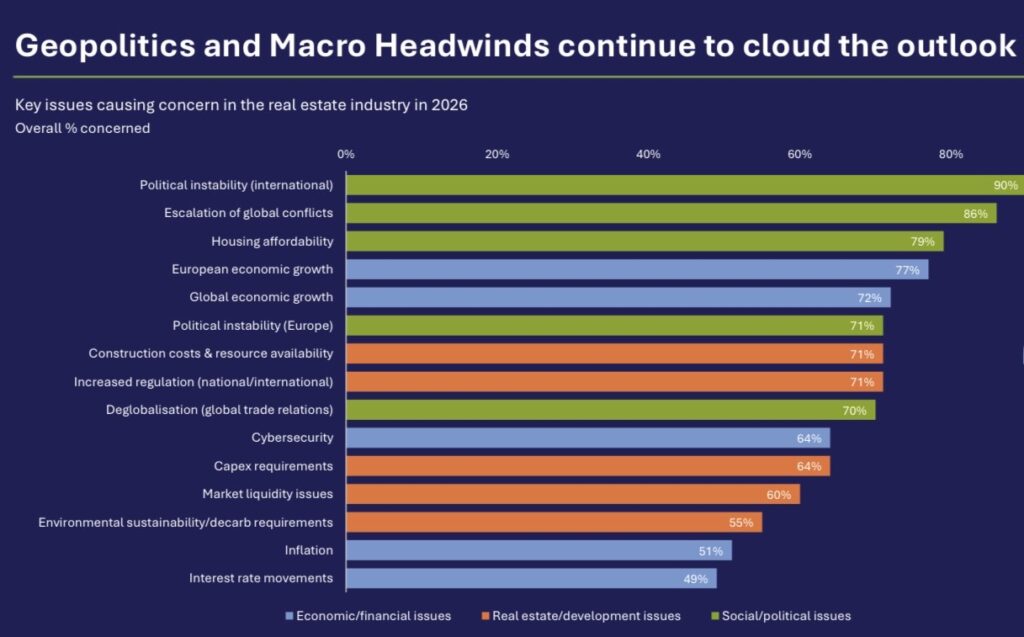
“There is less of a focus on real estate issues and more concern about the general context”, said Veith. “The main worries this year are political instability and the escalation of global conflicts, the lack of economic growth in Europe and more specifically in Germany.”
One survey respondent expressed the view of many when he said that “in the current environment, we are not sitting on the sidelines waiting for certainty. Our focus is on how to navigate uncertainty.” Another respondent said that volatility is no longer regarded as some temporary bug, but rather as a permanent feature that must be taken into account.
The question is how to navigate the uncertainty. The answer is by doing what real estate investors should do: deploy capital in the sector and contribute to the relaunch and renewal of economic growth in Europe.
So far investment activity has remained sluggish, but conditions seem to be more favourable in 2026.
“There is more willingness on the part of the banks to work actively and provide more liquidity”, said Veith. “One of the key messages is that the capital is there, plenty of family office and private equity money around. So it is not the equity side that limits the market. We are not back to 2022 levels, but there will be more liquidity in 2026.”
Capital is not the problem, but rather the willingness to take the plunge and invest. Investors continue to favour large, transparent and liquid markets in countries with strong democratic institutions and a solid legal framework.
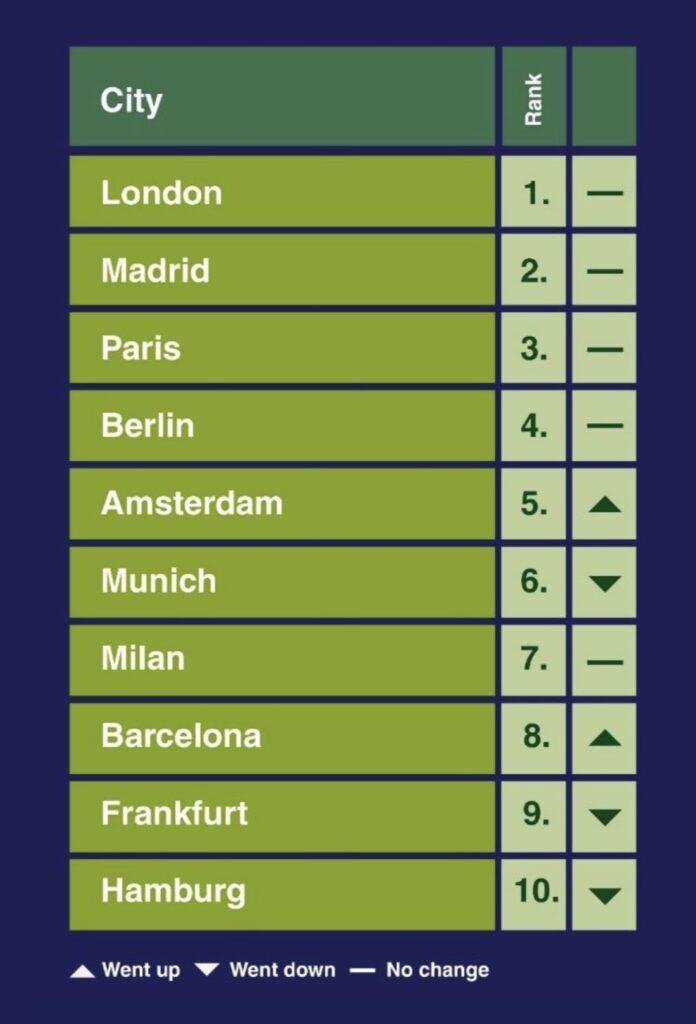
London, Paris and Berlin remain firm favourites, but it is significant that Madrid is at number 2 in the rankings and Barcelona has risen to number 8, reflecting Spain’s stronger economic performance.
There needs to be more faith in Europe as a good place to invest in. “More US investors are coming here, because there is value”, said Veith. “Europe is a good place to be in, there are so many opportunities and so much to do. The industry needs to face reality in these challenging times, because real estate plays a crucial role in the attractiveness of the continent and is a very relevant part of the journey to a stronger, more competitive Europe.”


