

How Seychelles is building a modern international financial centre
An extensive programme of legislative reform is designed to strengthen governance, enhance regulatory oversight and respond to evolving international expectations.
The global financial services industry is undergoing profound change. Investors, multinational businesses and financial institutions increasingly expect jurisdictions to offer not only efficiency and flexibility, but also robust regulation, transparency and alignment with international standards.
Against this backdrop, Seychelles is positioning itself as a modern international financial centre that combines regulatory credibility with a forward-looking approach to innovation.
While long recognised as an international business jurisdiction, the country has spent recent years implementing an extensive programme of legislative reform designed to strengthen governance, enhance regulatory oversight and respond to evolving international expectations. The result is an increasingly sophisticated financial services ecosystem that aims to provide confidence for international investors while supporting sustainable long-term growth.
A new phase of development
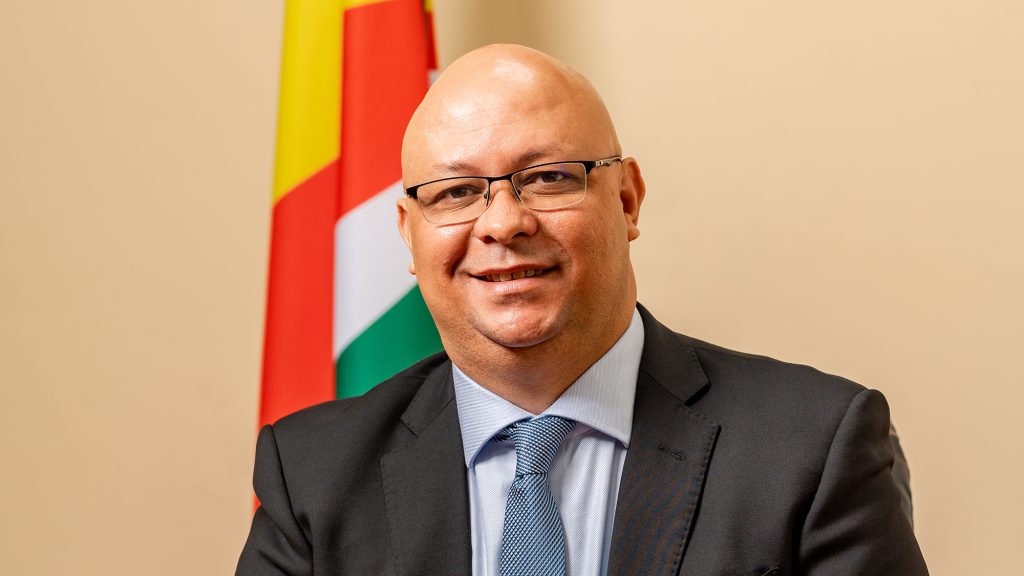
The appointment of a new Chief Executive Officer at the Financial Services Authority (FSA), Mr Pascal Morin, at the end of 2025 signals the beginning of a new phase for the regulator, with continued emphasis on regulatory effectiveness, stakeholder engagement and the long-term development of Seychelles’ non-bank financial services sector.
Rather than standing still, the jurisdiction is pursuing an ambitious programme of reform across multiple areas of financial services.
Legislative reviews are underway covering insurance, private pensions, financial services intermediaries and consumer finance, while the FSA is also updating its own governing legislation and the framework for international corporate service providers. At the same time, new corporate governance standards and enhanced fit-and-proper requirements are strengthening expectations around integrity, accountability and professional standards.
For international businesses, these reforms demonstrate a regulatory environment that continues to evolve alongside global best practice rather than reacting to it.
Reinforcing international credibility
Perhaps the clearest evidence of Seychelles’ progress came with its recent OECD Global Forum rating of “Largely Compliant” for transparency and exchange of information on request.
The rating reflects several years of legislative improvements, including reforms relating to beneficial ownership, anti-money laundering measures and the International Business Companies framework. Further amendments covering international business companies, trusts and foundations are already under consideration as Seychelles continues to align its legislation with evolving OECD and FATF standards.
For investors, regulatory credibility has become an increasingly important factor when selecting jurisdictions for international operations, wealth structuring and cross-border investment. Demonstrating compliance with recognised international standards
helps reduce uncertainty while enhancing confidence among financial institutions, counterparties and corporate clients.
Innovation alongside regulation
While strengthening compliance remains a priority, Seychelles is also preparing for the next generation of financial services.
One example is the Authority’s policy development work around securities tokenisation and virtual asset activities, recognising that digital finance will increasingly shape international capital markets.
Rather than treating innovation and regulation as competing objectives, the FSA’s approach seeks to establish appropriate safeguards while enabling responsible technological development.
This balance is becoming increasingly important as institutional investors and financial firms seek jurisdictions capable of supporting emerging business models without compromising regulatory integrity.
It is both appropriate and timely to frame International Business Companies (IBCs) within Seychelles as evolving vehicles that support participation in virtual asset and financial innovation ecosystems. This shift is underpinned by the introduction of the Virtual Asset Service Providers Act, 2024, which establishes a comprehensive licensing and supervisory regime for entities engaging in activities such as virtual asset exchanges, wallet services, broking, and digital asset investment management.
Related articles
- Seychelles aligns digital growth with sustainable investment goals
- Seychelles moves to become a destination to bank on
Crucially, the framework expressly permits both domestic companies and IBCs to operate as licensed virtual asset service providers, thereby integrating traditional offshore structures into a regulated virtual economy. The Act, together with its detailed subsidiary regulations on licensing, cybersecurity, capital requirements, and the registration of ICOs and NFTs, reflects a deliberate policy move to align Seychelles with international standards, including those of the Financial Action Task Force, while positioning the jurisdiction as a credible hub for compliant innovative activities.
Complementing the above-mentioned legislative framework is the Financial Services Authority’s regulatory sandbox regime, which provides a structured pathway for fintech and blockchain ventures to test innovative products within a controlled and supervised environment. The sandbox allows startups, including those structured as IBCs, to operate temporarily under reduced regulatory burden while refining their business models, before transitioning into full licensing activity.
This policy architecture demonstrates a balanced approach, encouraging innovation and market entry, while maintaining regulatory oversight and
risk management. Taken together, the VASP Act and sandbox framework illustrate how Seychelles is actively repositioning its corporate vehicles beyond passive holding functions toward active participation in emerging financial sectors, reinforcing both the adaptability and long-term strategic relevance of IBCs within a modern, digitally integrated regulatory landscape.
A diversified financial services ecosystem
Today’s Seychelles offers considerably more than traditional international business company structures. The jurisdiction provides a broad range of regulated solutions, including international business companies, trusts, foundations, collective investment schemes, insurance and reinsurance, captive insurance, international trade zones and virtual asset service providers, each operating within established legislative frameworks overseen by the FSA.
International Business Companies remain one of the jurisdiction’s best-known offerings, providing a flexible corporate structure that can typically be incorporated within a day and used for a wide range of international business purposes. Similarly, Seychelles’ modern trust and foundation legislation provides internationally recognised wealth planning and succession tools within a regulated legal framework.
The mutual funds regime accommodates public, private and professional funds, while the insurance sector supports domestic and international insurers, reinsurers and captive insurance businesses. The Seychelles International Trade Zone complements these financial services by providing an internationally competitive platform for export-oriented businesses, manufacturing and logistics.
Collectively, these structures allow investors and businesses to tailor solutions appropriate to different commercial, investment and wealth management objectives.
As international finance continues to evolve, successful jurisdictions will increasingly be defined not simply by competitive tax regimes or administrative efficiency, but by their ability to combine regulatory credibility with innovation, governance and investor confidence.
Seychelles appears determined to compete on precisely those terms.
Through ongoing legislative reform, stronger supervisory standards and careful engagement with emerging sectors such as digital assets and tokenisation, the jurisdiction is seeking to reinforce its position within the global financial services landscape. l
This article is sponsored by the Financial Services Authority Seychelles
