
Location risks rise as global data centre investment accelerates
The global data centre investment boom is creating a more complex set of location risks for developers and investors, with access to power and land increasingly having to be weighed against natural hazards, geopolitical exposure and local opposition.
New research from insurance broker Howden finds that exposure to severe weather among US data centres is heavily concentrated geographically. Just 20 locations account for around 80% of US data centre floorspace affected by severe tornadoes and hailstorms over the past decade.
The data centres exposed to at least one such event during that period generate an estimated $16 billion in annual revenue, illustrating the financial value concentrated in higher-risk locations.
The findings come as AI drives a major expansion of digital infrastructure globally, intensifying competition between cities and regions for data centre investment. For investment promotion agencies and economic development authorities, the sector has become an increasingly significant source of capital expenditure, but one whose location requirements extend well beyond the availability of suitable sites.
Howden’s analysis suggests that some US locations exposed to natural catastrophe risk continue to attract projects because of access to power and space. The growing electricity requirements of data centres are also leading some developers and operators to become increasingly involved in power generation themselves.
That reinforces the importance of energy infrastructure to the location proposition for data centre investment, while adding resilience, insurance availability and construction standards to the factors developers need to assess before committing capital.
Share of US data centre building space impacted by tornadoes and hail events by number of locations
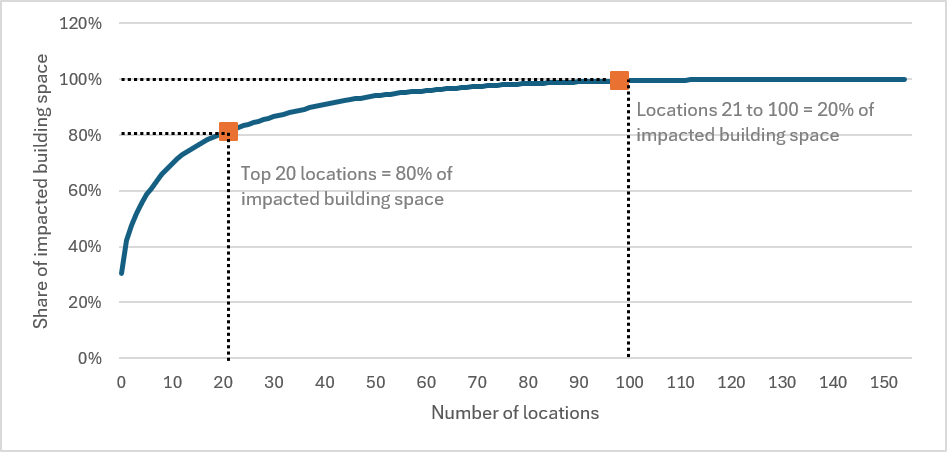
Source: Howden analysis of NOAA and 451 Research by S&P Global
Geopolitical risk enters the location equation
Physical climate risk is not the only consideration becoming more prominent. Howden also found a sharp increase in the amount of data centre infrastructure situated close to active conflict zones.
In 2025 alone, data centre space located within 10–15km of active conflicts was equivalent to around 60% of the total recorded across the previous five years combined.
The report says the risk became still more tangible in 2026, when commercial data centres in the UAE and Bahrain were deliberately targeted during conflict in the Middle East.
The findings highlight the strategic importance of digital infrastructure and add another consideration for companies assessing where to locate critical computing capacity. Resilience increasingly encompasses not only power supply, connectivity and redundancy but also the geopolitical exposure of the physical infrastructure underpinning digital operations.
Data centres within 10-15 kilometres of active conflict zones
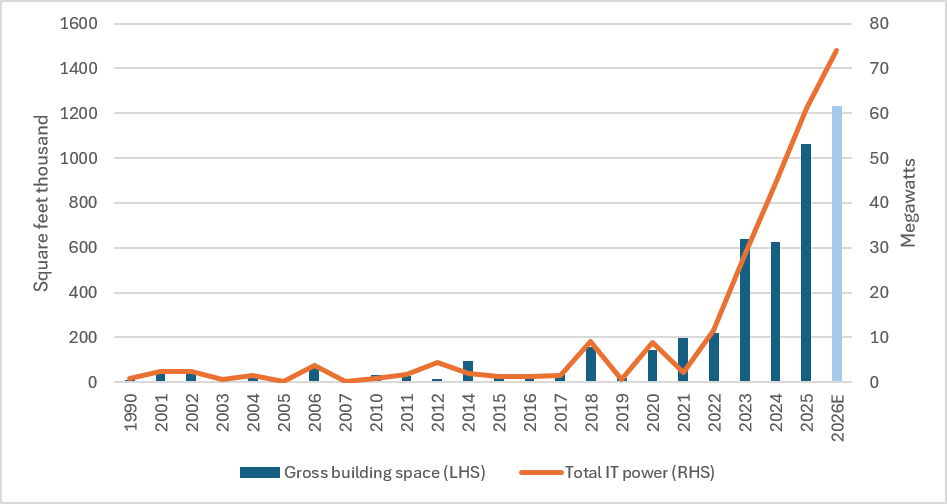
Source: Howden analysis of UCDP and 451 Research by S&P Global
Community acceptance becomes an investment factor
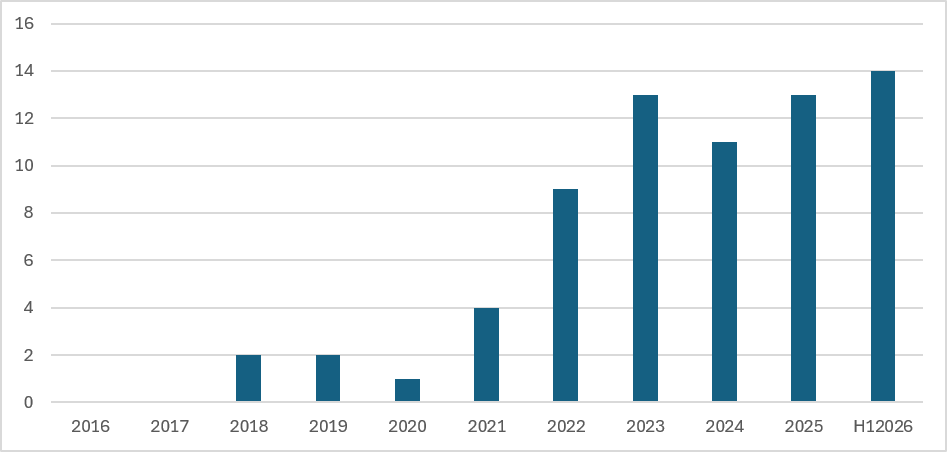
A third location risk identified by Howden comes much closer to the planning process. Major lawsuits and arbitrations involving data centres have more than tripled, from four during 2021 to 14 in the first half of 2026.
Planning, zoning and environmental disputes are among the principal causes, alongside complaints about noise, diesel generator emissions, water consumption and visual impact.
Noise has become particularly significant. Half of the 14 cases recorded in the first six months of 2026 related to community complaints over cooling, power, computing or other facility equipment, compared with only two noise cases recorded during the entire 2018–2025 period.
The trend has implications for locations competing to attract hyperscale and AI infrastructure. Securing a site, planning approval and sufficient power may not in themselves guarantee a project’s long-term viability if rapid development generates sustained local opposition.
For data centre investors, the research therefore broadens the traditional location equation. Power, land, connectivity and speed to market remain critical, but natural hazard exposure, geopolitical resilience, insurability and community acceptance are increasingly part of the investment calculation.
For governments and investment promotion agencies, that also raises the bar for what constitutes a competitive data centre proposition. Locations able to combine energy availability and digital connectivity with resilient infrastructure, effective planning and community engagement may be better positioned to accommodate the next wave of AI-driven investment.
Major lawsuits and arbitrations against data centres worldwide by filing year
Source: Howden analysis of public data including industry reporting, court records and NGO case trackers