

Growth will continuously fuel the drive to invest
What trends, motives or drivers will shape the FDI landscape and investment flows in 2026?
In 2026, I believe, investors will continue to prioritise resilience: especially secure energy supply, diversified supply chains, and predictable operating environments. Nearshoring and friendshoring will remain strong as companies balance cost with geopolitical and logistics risks, and look for locations closer to EU markets.
Digitalisation and automation will be a major driver – both within firms and in public services – because speed of execution and lower compliance costs increasingly shape location decisions.
We also expect more focus on ‘bankable’ green transition investments: renewables, grid modernisation, storage and energy efficiency, supported by long-term contracts and clearer permitting.
Finally, competition for talent will intensify, pushing investors toward places that can combine quality skills with improved mobility, flexible work models and investor aftercare.
What regions and sectors are you bullish about for 2026 and why?
I’m bullish about regions that combine market access, skilled talent and improving infrastructure – particularly Central & Eastern Europe and the wider neighbourhood connected to EU value chains. Sector-wise, the strongest momentum is in:
- renewable energy and energy infrastructure (including storage and smart-grid solutions);
- IT and digital services – especially cybersecurity, enterprise software, and business services;
- advanced manufacturing linked to European supply chains (electronics components, automotive-related production, and industrial services);
- healthcare-related investments where quality services can attract regional demand.
Across these sectors, investors are looking for speed-to-market, regulatory clarity, and the ability to scale – conditions that can create outsized opportunities for smaller, agile economies.
What keeps you up at night or worries you about FDI in 2026?
The biggest concern is continued geopolitical instability and the risk that capital is increasingly diverted into ‘war economies’ rather than long-term, productivity-enhancing investment. Prolonged uncertainty raises the cost of financing, reduces risk appetite and encourages short-term decisions.
A second worry is the widening gap between economies that can offer predictable rules, reliable infrastructure and skilled labour and those that cannot keep pace. For smaller countries, a tight labour market can be a constraint unless matched with productivity reforms, training and smart talent policies.
Finally, investor confidence remains sensitive to governance and the consistency of public policy: even strong incentives can’t compensate for uncertainty in implementation.
Equally, what reasons do you find for optimism?
I’m optimistic because companies still need growth, efficiency and secure market access – and that keeps FDI moving, even in complex times. We need to see progress, and I believe that will continuously fuel our drive to invest. The green transition is creating a new wave of real-economy projects with clear demand and long horizons.
In parallel, the digital transformation of government services is making many countries genuinely easier to do business in, reducing friction for investors and local firms alike. For Moldova, this plays a special role, in 2025 alone we managed to digitalise 75% of public services for businesses, up from 60% at the beginning of the year.
I also see stronger partnerships emerging between governments, IFIs, and the private sector to de-risk strategic projects through guarantees, blended finance, and long-term contracting models. And importantly, many investors are looking beyond size: they value agility, speed and a committed reform agenda – which smaller economies can offer.
Any other thoughts you would like to share?
I believe peace and stability remain the most powerful investment promotion tools. When countries and regions can shift attention from uncertainty to sustainable, productive growth, investors respond quickly.
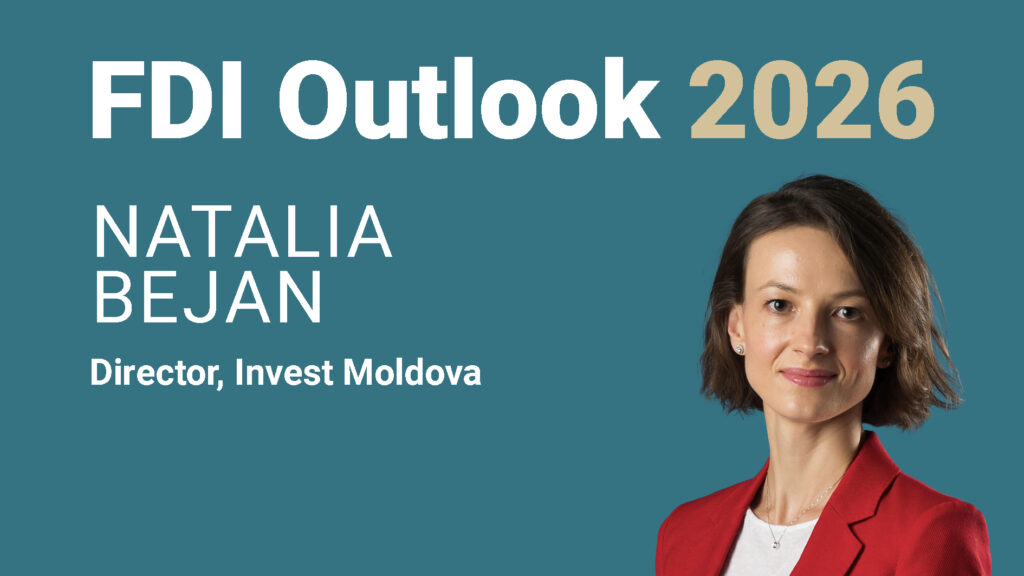
Natalia Bejan, Director, Invest Moldova
