

We are seeing a decisive shift to innovation-led FDI
What trends, motives or drivers will shape the FDI landscape and investment flows in 2026?
In 2026, foreign direct investment will be shaped less by pure cost considerations and more by resilience, innovation capacity and ecosystem strength. Investors are increasingly prioritising locations that combine advanced infrastructure, skilled talent, regulatory clarity and access to innovation networks.
We are also seeing a decisive shift towards innovation-led FDI, where investment is tied to R&D, advanced manufacturing, data, automation and clean technologies rather than purely production capacity. This plays directly to the strengths of places that can offer not just land or incentives, but integrated innovation environments, such as those we are developing at the Barcelona Free Zone through initiatives like DFactory Barcelona and the broader District 4.0.
What regions and sectors are you bullish about for 2026 and why?
From a regional perspective, Southern Europe – and Barcelona in particular – is emerging as a highly attractive destination for technology-driven and industrial investment. The combination of talent, connectivity, quality of life and public-sector support for innovation is resonating strongly with international investors seeking a European base.
Sector-wise, we are particularly bullish on Industry 4.0-related activities, including robotics, artificial intelligence, advanced manufacturing, semiconductors, logistics technology and clean and circular industries. At DFactory Barcelona, we see daily evidence of how these sectors benefit from proximity – companies innovate faster when startups, scale-ups, corporates, research centres and public institutions operate side by side. This clustering effect is becoming a decisive factor in investment decisions.
What keeps you up at night or worries you about FDI in 2026?
One of the main concerns is the risk of fragmentation and short-termism. As competition for investment intensifies, there is a temptation to focus on quick wins rather than long-term value creation. This can lead to misalignment between investment attraction, urban development, skills policy and sustainability goals.
There is also the challenge of ensuring that regulation keeps pace with innovation. Investors in emerging technologies need clarity and predictability, particularly in areas such as data, AI, energy transition and industrial policy. If Europe is not careful, regulatory complexity could slow decision-making at a time when speed is increasingly critical.
Equally, what reasons do you find for optimism?
There are strong reasons for optimism. Europe has a unique opportunity to position itself as a global leader in responsible, technology-driven and sustainable industry. Public investment programmes, combined with private capital, are creating momentum in areas such as digitalisation, decarbonisation and advanced manufacturing.
In Barcelona, we see this optimism reflected in the success of District 4.0, an ambitious initiative supported by the City of Barcelona and the Spanish government to transform the Zona Franca into a European hub for innovation and sustainable industry. The rapid growth of DFactory Barcelona, and the quality of international companies choosing to locate there, demonstrate that investors are looking for precisely this kind of long-term, innovation-oriented proposition.
Any other thoughts you would like to share?
The role of investment promotion agencies must continue to evolve. At the Consorci de la Zona Franca de Barcelona, our focus is not just on attracting capital, but on building ecosystems – places where investment, innovation, talent and sustainability reinforce each other.
FDI in 2026 will reward locations that think holistically: about industry, cities, people and technology together. Our experience at DFactory Barcelona shows that when public vision and private investment align around innovation, the result is not only economic growth, but a more competitive, resilient and future-ready economy.
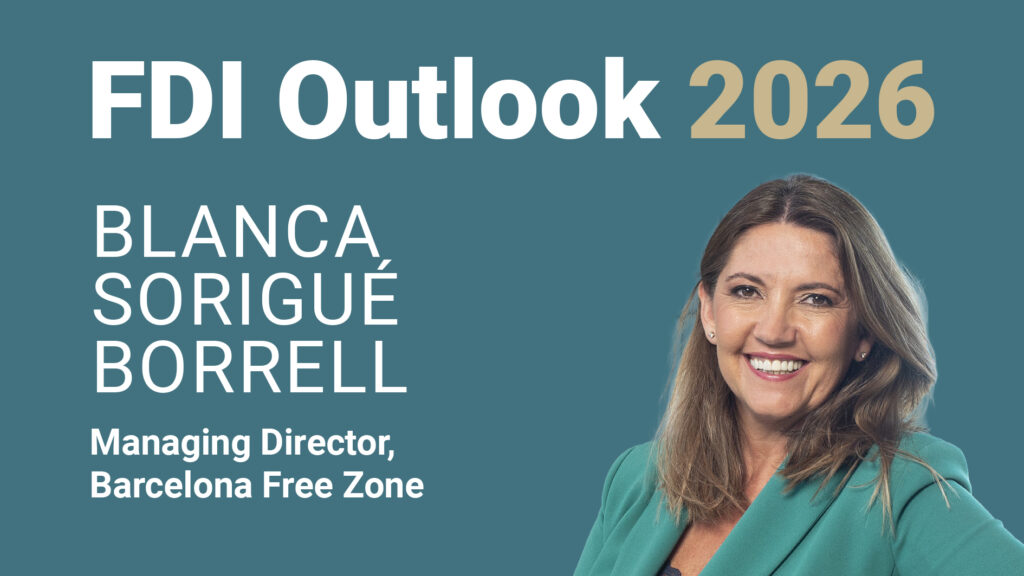
Blanca Sorigué Borrell, Managing Director, Barcelona Free Zone
