

Energy, AI and connectivity drive investment momentum in Armenia
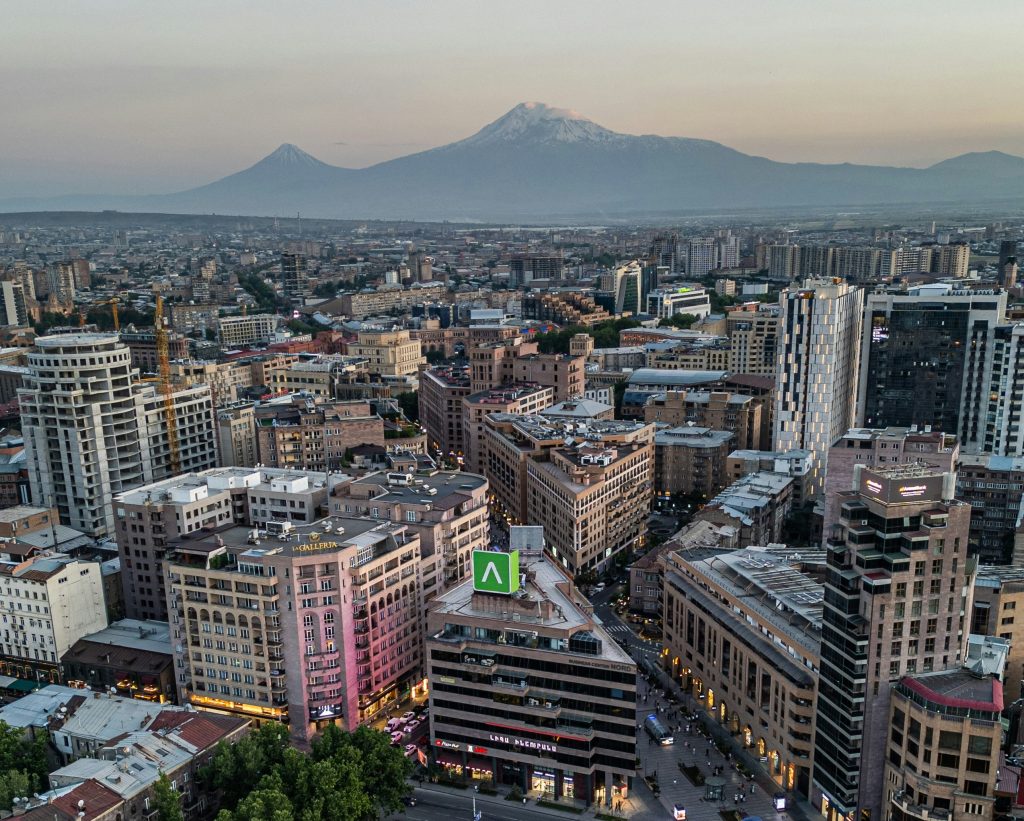
Rapid growth in solar capacity, major investment in AI infrastructure and plans for greater regional connectivity are expanding the opportunities for international capital.
Armenia is emerging as a market worth a closer look for real asset investors, as investment requirements in energy and infrastructure converge with new demand from digital infrastructure and potentially significant changes in the country’s regional connectivity.
The South Caucasus economy is investing in the modernisation of its energy system and transmission infrastructure, while major AI computing projects are creating new requirements for reliable power and sophisticated digital infrastructure. At the same time, plans to improve transport links through Armenia could generate longer-term opportunities spanning railways, roads, power transmission, digital networks and supporting logistics assets.
These developments are beginning to create a broader real-assets proposition linking energy, technology and connectivity.

“Armenia is at a turning point. Our people have already built real strength in technology and engineering. Now we are building what comes next: energy, digital infrastructure and the routes that connect us to the region and beyond. When these pieces come together, investors aren’t backing one project. They are part of a country that is building its future, and we want them with us from the start,” says Gohar Abajyan, CEO of Enterprise Armenia, the country’s inward investment agency.
Armenia has been modernising an electricity system that has historically relied heavily on nuclear power, natural gas and hydroelectric generation, while seeking to increase renewable capacity and strengthen energy security.
The country’s solar energy sector has expanded significantly, with installed solar capacity increasing from 16 MW in 2018 to approximately 1,213 MW today, exceeding the 1,000 MW capacity envisaged for 2030. With the continued growth of variable renewable generation, the focus is now shifting toward strengthening the flexibility and reliability of the electricity system. In this context, the development of battery energy storage systems (BESS) has become a key priority, enabling electricity generated during periods of high solar production to be stored and supplied during periods of demand. Armenia is targeting the establishment of at least 800 MW of electricity storage capacity by 2031, alongside the introduction of the necessary regulatory and market framework to support the development of storage infrastructure.
Meanwhile, the World Bank’s $40 million Enabling the Energy Transition programme aims to help Armenia’s transmission grid integrate an estimated 1.1GW of renewable generation capacity by 2032, while mobilising $550 million in private investment.
AI drives new infrastructure demand
The growth of AI is creating a new dimension to Armenia’s energy and infrastructure investment story. Data centres require large volumes of reliable electricity alongside cooling, high-speed connectivity and other supporting infrastructure, creating a close relationship between investment in computing capacity and the energy systems needed to power it.
Armenia is already attracting substantial investment in AI infrastructure, with two projects demonstrating the scale of the computing — and potentially energy — requirements now emerging.
In August 2026, US-based AI cloud and infrastructure company Firebird opened a major AI factory in Hrazdan, powered by Dell infrastructure and NVIDIA Blackwell GPUs. The initial facility deploys more than 6,000 GPUs. What began in June 2025 as a nearly $500 million AI infrastructure project in Armenia was expanded in February 2026 with the announcement of a second phase, bringing the total planned investment to $4 billion and the target deployment to 50,000 NVIDIA Blackwell GPUs by the end of 2026. The expansion followed U.S. regulatory approval for the delivery of an additional 41,000 NVIDIA GB300 GPUs, building on the initial phase of the Firebird AI supercomputing project.
Another major AI infrastructure project is taking shape in Gagarin, where Armenian AI infrastructure company Eleveight AI opened a facility using 512 NVIDIA Blackwell B300 GPUs in June 2026. The site is the first stage of a $150 million investment programme, of which $70 million has already been deployed.
The initial 1.5MW of capacity is already operational. The next stage of Phase 1 is under way and is expected to take the site to 5MW by year-end, with a further 35MW planned in Phase 2, bringing total capacity to 40MW.
Together, the Firebird and Eleveight projects point to an emerging relationship between Armenia’s technology ambitions and its energy investment needs. If AI infrastructure continues to expand at this pace, the ability to provide reliable power, additional grid capacity and potentially greater storage and renewable generation will become increasingly important, turning growth in the technology sector into a driver of investment in physical infrastructure.
New connections, new opportunities
Energy is also increasingly linked to Armenia’s wider connectivity ambitions. The government’s Crossroads of Peace initiative seeks to improve regional transport and economic connections and ultimately increase links between the Black Sea, Caspian region and Persian Gulf.
The Trump Route for International Peace and Prosperity (TRIPP) has added a more concrete dimension to that ambition. Envisaged as a potential link in the Trans-Caspian Trade Route connecting Central Asia and the Caspian region with Europe, TRIPP is moving towards an implementation structure. A framework agreement signed by Armenia and the United States in June provides for the establishment of a joint TRIPP Development Company (TDC), to be owned 74% by the U.S. side and 26% by Armenia, to support the development of multimodal infrastructure in Armenia.
Potential projects are not confined to transport. The framework specifically encompasses rail and road infrastructure, oil and gas pipelines, fiber-optic networks and electricity projects. Prime Minister Nikol Pashinyan said in August 2026 that electricity transmission lines could be among the first infrastructure developed under TRIPP citing both the relative speed with which they could be delivered and growing demand for electricity exports in the region.
Separate special-purpose vehicles are envisaged for individual infrastructure components, opening the possibility of different financing and investment structures as projects advance.
An earlier implementation framework also explicitly identified attracting foreign investment into Armenian infrastructure as one of Armenia’s objectives for TRIPP, while noting that opportunities for private-sector investment in individual SPVs could be considered on a case-by-case basis.
Assets around the assets
Improved connectivity can create requirements for terminals, warehousing, logistics and distribution facilities. Increased trade can support industrial locations and services, while new energy connections require transmission infrastructure and greater movement of data requires digital capacity. These secondary opportunities can eventually prove as important to real asset investors as the principal transport corridors themselves.
There is also a resilience argument. Companies globally are reassessing supply chains and seeking greater route optionality as geopolitical fragmentation exposes the vulnerabilities of dependence on individual trade corridors.
Armenia’s proposition therefore increasingly sits at the intersection of several major investment themes: energy-system modernisation, digital infrastructure, AI-driven power demand and new regional connectivity.
Armenia is preparing to bring international companies and investors together around these opportunities at a Crossroads of Peace Investment Summit planned for May 2027, providing a platform to examine how greater connectivity and the country’s evolving economic priorities can translate into new investment.
As international capital searches for assets linked to energy resilience, digitalisation and new trade corridors, Armenia may increasingly find itself on the radar of real asset investors.


