

Digitalisation is still the backbone of FDI strategy
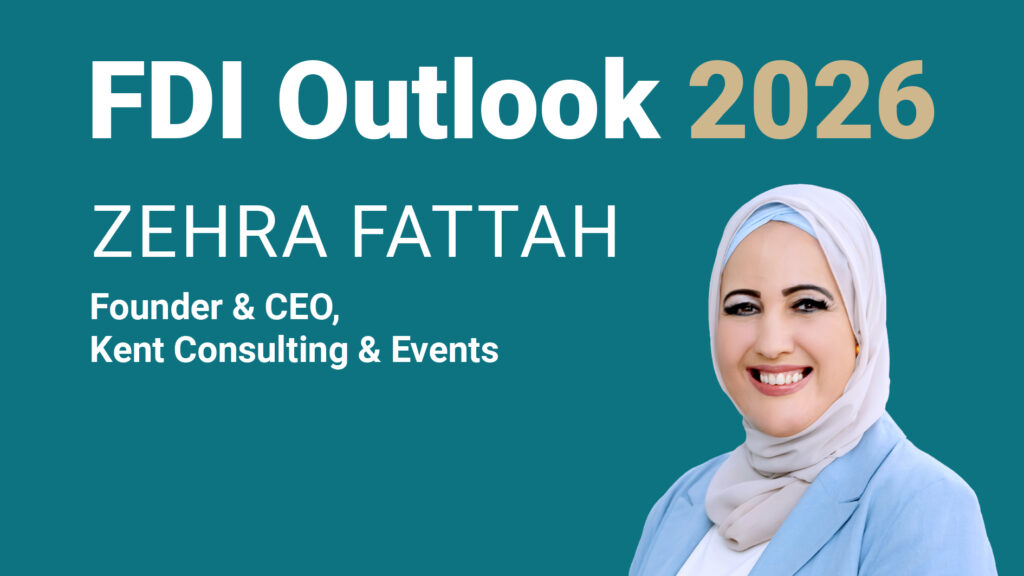
What trends, motives or drivers will shape the FDI landscape and investment flows in 2026?
In 2026, the global FDI environment will be shaped by a more fragmented world, but also by clearer opportunities for markets that can offer scale, predictability and geopolitical neutrality.
Global trends still matter. Technological transformation, supply‑chain redesign and geopolitical recalibration remain the dominant drivers influencing cross‑border capital. But as investors face more scrutiny in the US, Europe and parts of Asia, capital naturally shifts toward ecosystems that can absorb advanced industries, sustain digital infrastructure investment and offer secure long‑term platforms.
Digitalisation is still the backbone. Multinationals are prioritising automation, data‑rich operations, AI‑compatible infrastructure and risk‑management capabilities, and they increasingly view investment through a resilience lens rather than purely cost efficiencies.
Finally, structural growth markets, especially Southeast Asia and Africa, will remain attractive to firms trying to diversify away from single‑market dependencies, particularly as demographic demand expands.
What regions and sectors are you bullish about for 2026 and why?
First and foremost: the Gulf Cooperation Council (GCC). The region is no longer just competitive; it is becoming foundational in global FDI strategy.
The UAE is leading the narrative. Dubai’s record performance for greenfield investment in 2025 reflects deep investor confidence.
Saudi Arabia is following with scale and conviction. Vision 2030 reforms have shifted tens of billions of dollars into manufacturing, tourism, renewable energy, creative industries and logistics.
Beyond the Gulf, ASEAN markets such as Vietnam, Indonesia, Malaysia and the Philippines continue to benefit from production shifts and digital‑economy expansion.
India remains a long‑term anchor supported by policy reforms, infrastructure investment, and sustained tech‑driven growth.
Sector‑wise, I am confident in information technology and digital infrastructure, particularly hyperscale data centres and AI‑ready facilities; renewable energy and low‑carbon systems, driven by both policy targets and investor ESG mandates; and advanced manufacturing, including semiconductors, EV ecosystems and industrial automation.
What keeps you up at night or worries you about FDI in 2026?
The biggest concern is the acceleration of geopolitical fragmentation and the regulatory tightening that comes with it. National security reviews are no longer marginal, they are central and they increasingly dictate the pace and feasibility of cross‑border deals. Sensitive technologies, data‑rich industries and critical infrastructure projects face heavier scrutiny, longer approval cycles and higher compliance expectations.
Macroeconomic unevenness also poses a challenge. While the GCC, India and parts of ASEAN are performing strongly, several developed markets are experiencing declining FDI inflows.
Political instability across emerging markets could slow investment momentum, despite strong fundamentals. Investor confidence depends on institutional reliability, and where that is uncertain, capital hesitates.
Finally, tariff volatility and supply‑chain unpredictability complicate investment rationales.
Equally, what reasons do you find for optimism?
Despite the critics, 2026 is a year of strategic reallocation, not retreat.
The GCC is a major part of this optimism. The UAE and Saudi Arabia are consolidating their roles as global investment connectors, offering stability, infrastructure scale, sovereign capital depth and clear economic visions.
Asia also provides strong reasons for confidence. Southeast Asia and India continue to absorb diversified supply chains, cementing their roles in manufacturing, digital services and consumer‑driven sectors.
In Europe, even with softer aggregate inflows, strategic capital is resilient in advanced manufacturing, the energy transition, industrial relocation and life sciences, particularly in Southern and Eastern Europe.
Africa, despite risks, shows rising momentum in renewable energy, digital infrastructure, agribusiness and critical minerals, supported by demographics and regional integration.
And globally, the rise of patient, long‑horizon capital sovereign wealth funds, development finance institutions and next‑generation infrastructure investors, is helping sustain large, complex, capital‑intensive projects.
Zehra Fattah, Founder & CEO, Kent Consulting & Events
