

Long‑term projects are finally getting the green light
What trends, motives or drivers will shape the FDI landscape and investment flows in 2026?
Direct conversations with global companies point to several powerful forces shaping FDI in 2026. Above all, geopolitical stability remains a decisive factor. Investors are prioritising destinations that offer predictability, transparent regulatory environments and strong trade alliances.
Sustainability continues to be a defining driver. We expect a further rise in projects classified as “sustainable”, including green manufacturing, circular‑economy initiatives and renewable energy investments. These projects will continue to attract both private capital and government-backed incentives as companies work to meet their climate commitments.
High‑tech sectors will remain dominant. AI, cybersecurity and semiconductors are still commanding the bulk of investor attention. Countries that can offer deep talent pools, strong IP protection and advanced digital infrastructure will be best positioned to capture these high‑value projects.
What regions and sectors are you bullish about for 2026 and why?
UNCTAD’s Global Investment Trends Monitor (January 2026) shows global FDI rising 14% in 2025, driven largely by developed economies. We expect this momentum to continue, with the US and Western Europe remaining top destinations for foreign investment.
In North America, industrial policy tools such as the CHIPS Act will continue to attract large-scale semiconductor and advanced manufacturing projects. In Europe, decarbonisation policies are accelerating investment in hydrogen, clean energy infrastructure and next‑generation mobility.
Sector‑wise, we anticipate strong growth in advanced manufacturing, robotics, aerospace and defence, and battery production. Digital infrastructure such as data centres, semiconductors and cloud services will also continue expanding. And as mentioned earlier, green and climate‑aligned projects will remain a major magnet for capital, particularly in solar, wind, hydrogen, and carbon capture..
What keeps you up at night or worries you about FDI in 2026?
One of the biggest concerns is regulatory uncertainty, especially around AI. While companies are rapidly adopting AI tools, many governments are struggling to keep pace with the speed of technological change. Investors are increasingly seeking jurisdictions that can offer clarity and predictability in this space.
Another challenge is the shifting landscape of global trade. Longstanding trade relationships are being renegotiated or redefined, and it remains unclear whether emerging partnerships will provide the same stability and market access companies have relied on for decades.
Finally, talent shortages continue to constrain growth in major economies. Many companies may struggle to secure the skilled workers required to deliver their projects, which could lead to delays or scaled‑back job creation.
Equally, what reasons do you find for optimism?
There are many reasons to feel optimistic about 2026. After years of uncertainty, we are seeing companies finally green‑lighting long‑term projects that have been sitting in their pipeline. This year is shaping up to be a decisive “go‑no‑go” moment for many strategic investments.
Supply chain reconfiguration is another bright spot. Companies continue to diversify and regionalise their supply chains, which will benefit locations offering proximity to key markets, political stability and reliable infrastructure.
Sustainability is also a major source of optimism. Even when governments lag behind their climate targets, companies are pushing forward with ambitious environmental commitments. Demand for green energy options is rising across all sectors, from manufacturing to life sciences to AI and this will continue to drive investment into regions that can offer clean, reliable power.
These trends also encourage legacy industries to modernise and reduce emissions.
Any other thoughts you would like to share?
The investment promotion agencies that will succeed in 2026 are those that can offer investors confidence both in regulatory stability and political predictability. Investors are increasingly selective, prioritising locations with skilled talent, access to green energy, and a secure environment for long‑term capital deployment.
Agencies that can clearly articulate these strengths and provide seamless support throughout the investment journey will be the standout performers this year.
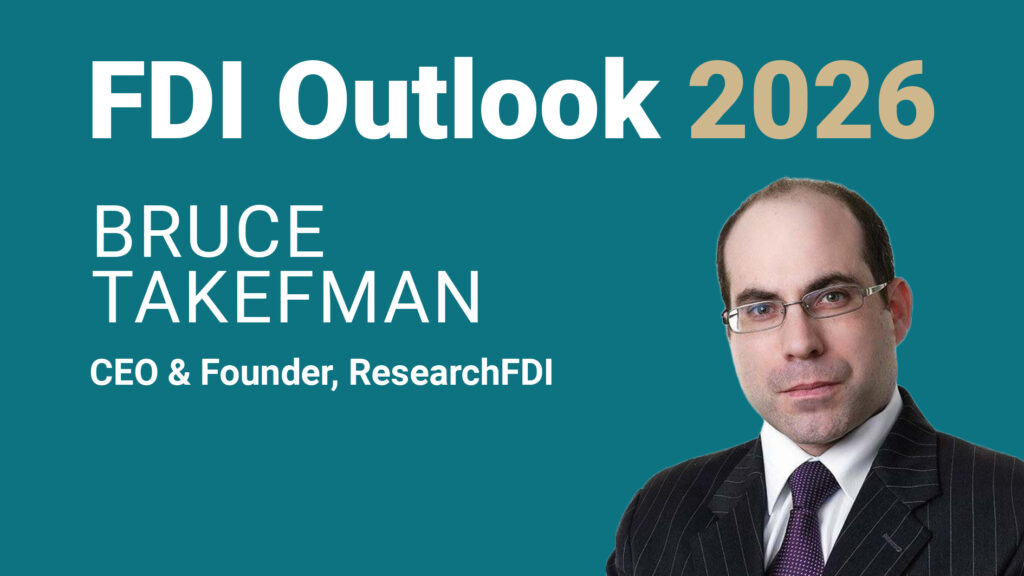
Bruce Takefman, CEO & Founder, ResearchFDI
