

Reykjavík’s next chapter: density, design and a transit-led future
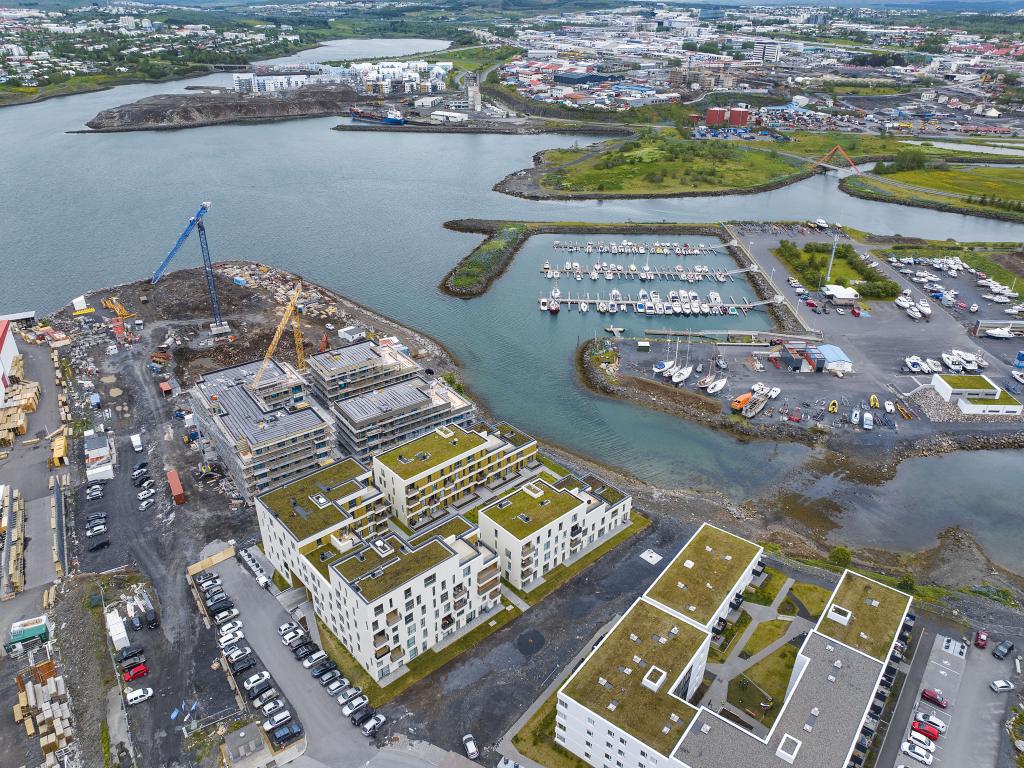
The Icelandic capital has prioritised development and densification along a corridor of brownfield sites.
For much of its modern history, Reykjavík has been defined by space. A low-rise capital set between sea and lava fields, its urban identity has long reflected Iceland’s geography: open horizons, detached housing and car-oriented mobility. But over the past decade, that model has been steadily, and deliberately, reshaped.
At the centre of this transformation is a focus on densification along a transit corridor, supported by brownfield regeneration and a strong emphasis on sustainable urban design.
“We made a decision more than a decade ago,” explains Ólöf Örvarsdóttir, head of environment and planning for the City of Reykjavík. “90% of new development would be densification – and mainly on brownfield sites. Not on green areas. Not on our natural spaces.”
That principle, embedded in Reykjavík’s municipal plan approved in 2013, continues to guide development today.
Building along the corridor
The most visible expression of this strategy is the east-west development axis aligned with the forthcoming Borgarlína bus rapid transit (BRT) system. The corridor, which will ultimately connect multiple municipalities across the capital region, has become the spine of new housing and mixed-use construction.
In recent years, hundreds of flats have been built along this route, in line with the model of helping to further the approach of transit-oriented development. Hotels, ground-floor retail and service uses are emerging in parallel.
For investors in real assets, this signals a structural shift. Reykjavík is no longer expanding primarily through peripheral suburban growth. Instead, it is intensifying existing districts, leveraging infrastructure already in place – schools, kindergartens, utilities – and strengthening neighbourhood vitality.
Importantly, the city has embedded social mix into its development agreements. Even in projects that appear high-end or high-rise by Icelandic standards, 15-20% of units may be designated as non-profit or affordable housing. “You cannot necessarily see it from the outside,” Örvarsdóttir notes, “but it is part of the contract.”
From harbour to brownfield
Reykjavík’s harbour regeneration has already demonstrated the city’s appetite for adaptive reuse. Underused industrial waterfronts have gradually given way to residential, commercial and cultural functions. Now, attention is turning to larger brownfield districts further east.
One of the most significant is Ártúnshöfði, a former industrial area set to become a mixed-use urban quarter anchored by the BRT line. The scale is substantial, with long-term plans for thousands of residents, new bridges to overcome existing transport barriers and a square positioned at a major transit node.
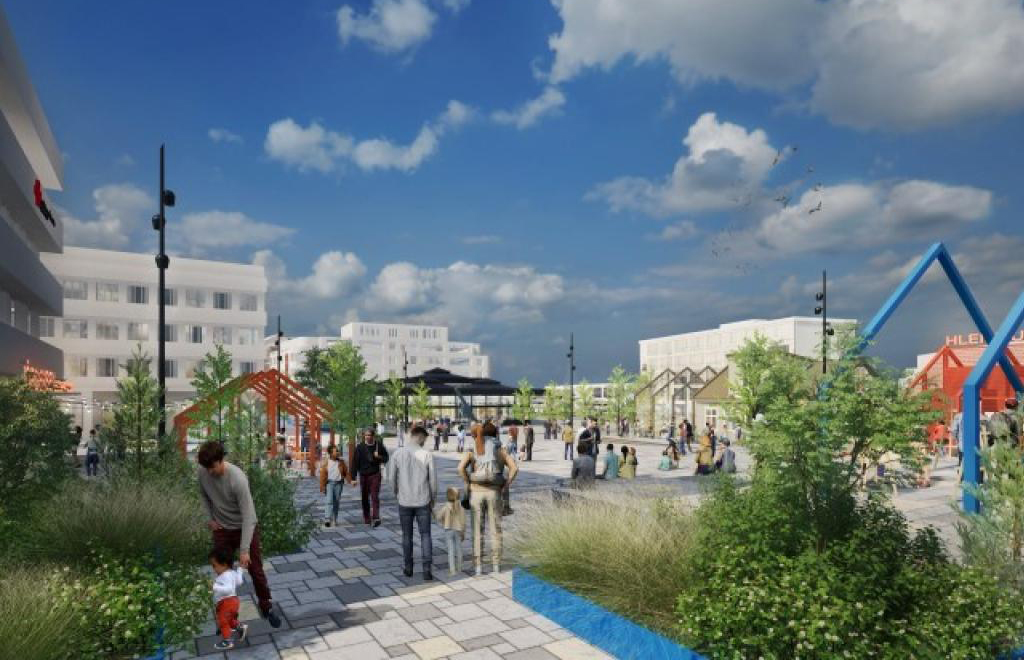
Elsewhere, Keldur – currently underdeveloped land in the eastern part of the city – represents another major opportunity. Plans envision new housing, services and integration into the broader transit framework. Political emphasis is also building around new neighbourhoods on the urban edge, though the dominant strategic direction remains inward densification.
Reykjavík’s approach is incremental but consistent. “The consistency over the last years has been key,” says Örvarsdóttir. “The municipal plan is legally binding and followed up by an implementation that is monitored carefully.
Changing preferences
What distinguishes Reykjavík’s planning philosophy is not only density but its qualitative ambition. The city is investing in urban design, public space and what Örvarsdóttir describes as “life between the buildings”. The city has recently approved an urban design policy as one of the main strategies for the built environment.
Walkability, 15-minute neighbourhood principles and public health considerations increasingly shape planning decisions. The city is also responding to changing generational preferences. While Iceland has traditionally favoured detached housing, younger residents are more open to apartment living, proximity and shared amenities.
At the same time, debates remain lively. Car use and parking demand continue to generate public tension, particularly in a society accustomed to spatial abundance. Yet the policy direction is set on reducing car dependency through improved public transport and compact urban form.
Reykjavík’s trajectory aligns with broader Nordic urban trends such as densification, brownfield reuse, and climate-conscious planning, but its scale and geography create distinctive dynamics.
The city’s compact population, strong municipal capacity and relatively transparent planning framework offer predictability for developers. The integration of transport and land-use planning under a unified municipal department – encompassing transport, environment, waste management and real estate – streamlines coordination.
KEF expansion complements city densification
A major development axis for Reykjavik and the surrounding area revolves around Keflavík International Airport (KEF), Iceland’s principal gateway to Europe and North America. Unlike Reykjavík’s inner-city densification focus, KEF’s expansion speaks to a broader, export-oriented growth strategy that links aviation capacity with logistics, tourism, technology and industrial activity.
The airport has seen consistent increases in passenger traffic and international connectivity, positioning it as a strategic hub not just for travellers, but for cargo and value-added services. In anticipation of continued growth, Iceland’s government and local partners have embarked on significant expansion plans to enhance KEF’s capacity, facilities and intermodal links.
At the heart of this effort is KADECO – Keflavík Airport Development Company, the state-owned entity mandated to transform the airport and its surrounding land into a multi-sector economic zone. KADECO’s remit is ambitious: to create new employment, attract foreign investment and catalyse sectors such as air logistics, maintenance repair and overhaul (MRO), advanced manufacturing, hospitality and innovation clusters tied to aviation and mobility technologies.
