
Leaders at London Gatwick Economic Summit call for collaboration to unlock regional prosperity
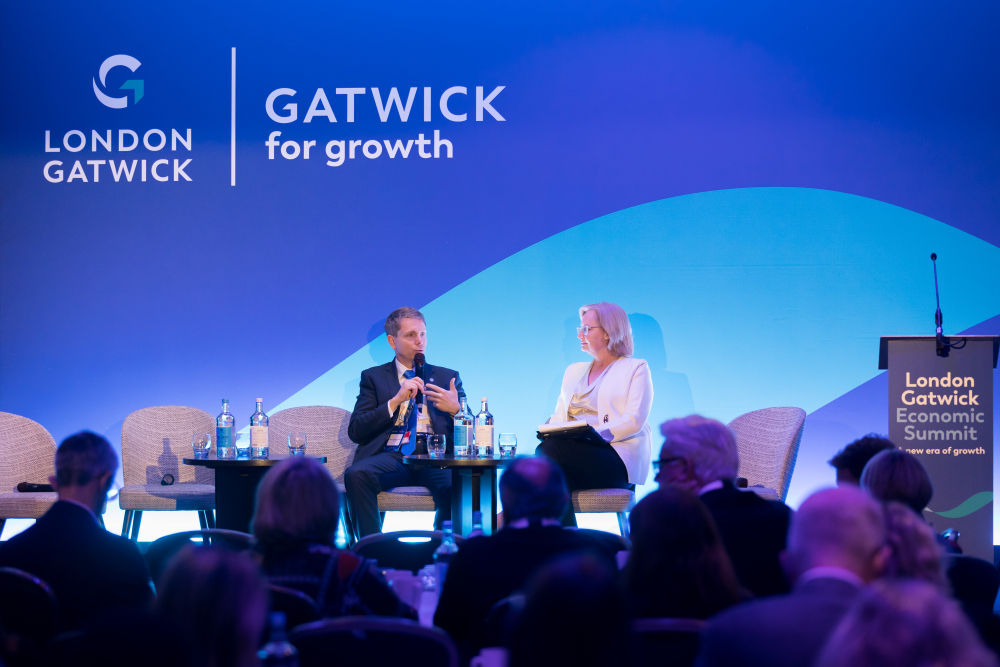
London Gatwick and its surrounding region signalled a new phase of confidence and economic ambition at the fourth London Gatwick Economic Summit, where more than 200 leaders from business, government, academia and regional partnerships gathered on 12 November 2025 to discuss how the airport can spur long-term sustainable growth and future inward investment in South East England.
Chaired by Courtney Fingar, editor of Real FDI, the summit took place against a backdrop of significant milestones for the area: from the formal launch of the Gatwick Region Airport Economic Zone (AEZ) earlier this year to the UK Government’s approval of the airport’s Northern Runway Project, a decision expected to unlock major investment, job creation and long-term competitiveness across the wider region.
The gathering underscored the Gatwick region’s shift from being seen merely as an airport catchment to positioning itself as an integrated economic hub with national and global relevance. As Pierre-Hugues Schmit, the newly appointed CEO of London Gatwick, framed it during his fireside conversation, “the airport’s growth is inseparable from the region’s prosperity” — and both are entering a period of accelerated transformation.
A strategic moment for a fast-evolving region
The summit reflected a year of momentum for the Gatwick region, one that has seen the AEZ concept move from strategy to implementation. Launched at UKREiiF in May, the AEZ brings together local authorities, business organisations, education partners and the airport in a coordinated structure aimed at promoting the region’s strengths, attracting investment and strengthening the area’s identity as a place to live, work, trade and innovate.
The approval of the Northern Runway Project sharpened that narrative even further. This expansion is expected to create more than 14,000 jobs and contribute £1 billion per year to the regional economy. The announcement coincided with the launch of 29 new services from Jet2.com and Jet2holidays, adding hundreds of jobs and setting the stage for deeper connectivity-led growth across the South East.
Conversations at the summit centred on how to maximise spillover effects of the airport’s growth — from SME export opportunities to talent mobility — and ensure infrastructure gains are felt across communities, not only within immediate transport corridors.
Devolution debate takes centre stage
With devolution accelerating across the UK, discussions also touched on governance, regional autonomy and economic decision-making. Leaders from devolved and soon-to-be-devolved regions shared lessons on how powers can be used to unlock investment.
A recurring theme was the need for public–private collaboration during the transition period, and the importance of ensuring new structures support rather than disrupt existing economic programmes. Julie Kapsalis, who represents the AEZ, highlighted the vital role the zone can play in providing stability, coherence and a consistent voice amid local government reorganisation.
From strategy to action
With a clearer industrial strategy, ongoing infrastructure investment, evolving governance structures and the development of the AEZ, the Gatwick region is entering a period of meaningful transition. The discussions at the summit suggest a region working to align its assets, partnerships and ambitions in a more coordinated way — aiming not only to support airport growth, but to strengthen its wider economic foundations for the long term.
The region now has both the structural and strategic ingredients to shape its future with confidence. The challenge, and opportunity, lies in converting that momentum into action.